


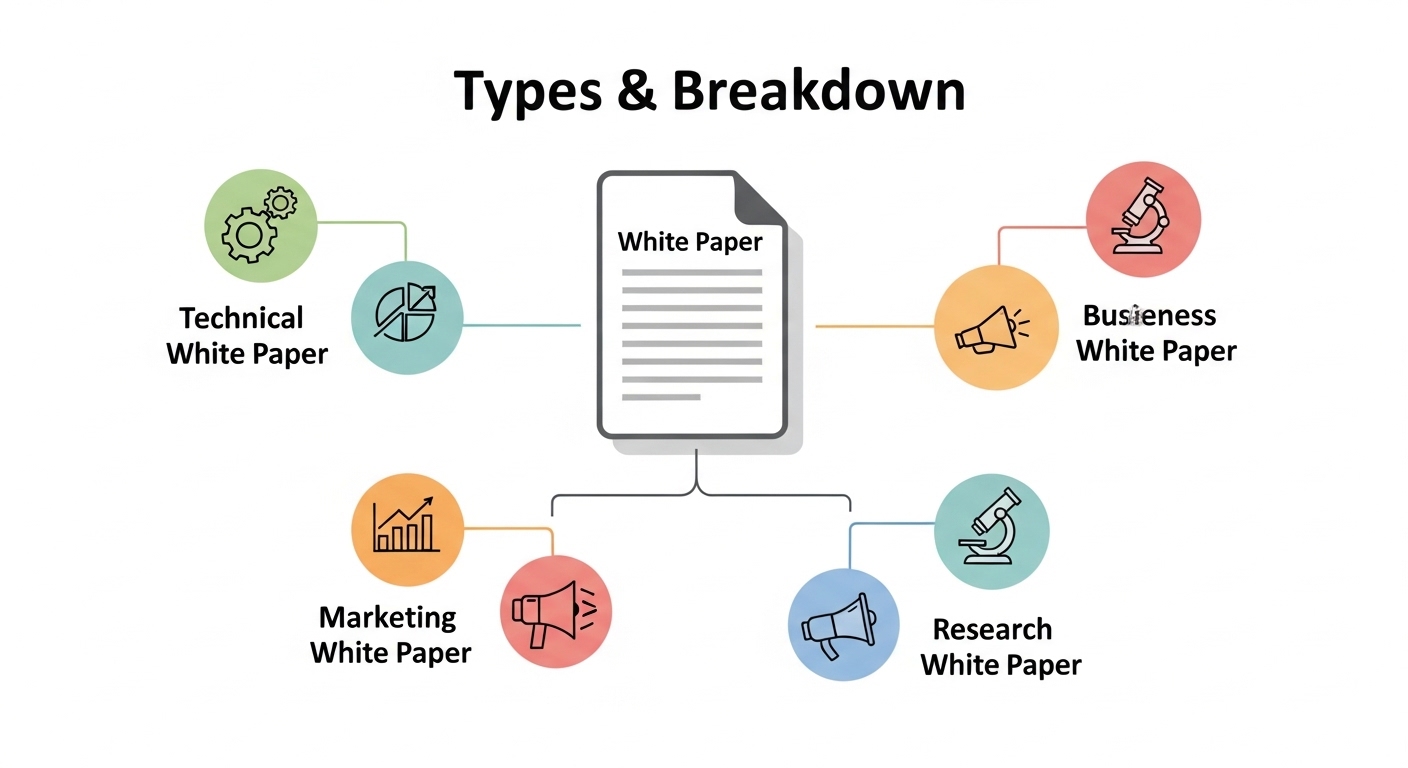
White papers have become a core part of modern professional communication, especially in industries where decisions depend on clarity, data, and structured thinking. From technology companies to financial institutions and policy organizations, white papers are used to explain complex topics in a credible and research-driven way. Unlike marketing content, a white paper focuses on logic, evidence, and problem-solving rather than persuasion alone.
In today’s competitive digital landscape, understanding white papers, their types, their purpose, and how to write a white paper effectively is essential for professionals, businesses, and technical writers. These documents not only communicate ideas but also influence decision-making, build authority, and establish thought leadership in a specific field.
This guide breaks down everything you need to know about white papers in a structured and practical way, helping you understand both the strategic value and the writing process behind them.
What Is a White Paper?
A white paper is a detailed, authoritative document that explains a specific issue and presents a well-researched solution. It is commonly used in business, technology, healthcare, and government sectors where complex topics need structured explanation. The purpose is not to sell directly but to inform, educate, and guide decision-making using facts and logical reasoning.
White papers typically combine research data, industry insights, and analytical discussion. They are often used to explain technical systems, propose business strategies, or evaluate policy decisions. Because of their depth and credibility, white papers are considered a powerful form of professional content writing that supports both internal and external communication.
Different Types of White Papers
White papers come in different formats depending on their purpose, audience, and industry application. Understanding the types of white papers helps writers choose the right structure for their content.
Problem-Solution White Papers
Problem-solution white papers are the most widely used format in business and technical writing. They begin by identifying a specific problem faced by a target audience and then explore why the problem exists and why current solutions may not be sufficient.
After establishing context, the document presents a structured solution supported by data, analysis, or case studies. This type of white paper is commonly used in B2B industries, SaaS companies, and consulting services because it aligns well with decision-making processes and business challenges.
Backgrounder White Papers
Backgrounder white papers focus on explaining a product, system, or concept in detail. Instead of centering on a problem, they provide a deep understanding of how something works, including features, functions, and technical components.
These white papers are especially useful in industries where products or technologies are complex and require explanation before adoption. They help readers understand value without using promotional language, making them ideal for technical documentation and product education.
Numbered List White Papers
Numbered list white papers present structured insights in a list-based format, such as “10 strategies for digital transformation” or “7 trends in cybersecurity.” While they are more readable and accessible, they still maintain the depth and research quality expected from a white paper.
This format is effective when addressing broad topics that can be broken into actionable insights. It is also widely used in content marketing because it balances readability with authority, making it suitable for both beginners and professionals.
Technical White Papers
Technical white papers are highly detailed documents designed for expert-level audiences. They include in-depth analysis, system architecture, technical specifications, and data-driven explanations. These white papers are common in engineering, software development, artificial intelligence, and scientific research.
Because they target specialized readers, technical white papers prioritize accuracy, precision, and structured explanation over simplicity. They are often used to support innovation, explain new technologies, or document research findings.
Hybrid White Papers
Hybrid white papers combine elements of multiple formats to create a more flexible structure. For example, a document may begin by explaining a problem, provide background information, and then include a list of solutions or recommendations.
This format is increasingly popular because it allows writers to adapt to different audiences while maintaining clarity and depth. Hybrid white papers are often used in modern business environments where communication needs to be both analytical and accessible.
Purpose of White Papers in Modern Communication
The purpose of white papers extends beyond simple explanation. They play a strategic role in communication, knowledge sharing, and decision-making across industries.
Building Authority and Thought Leadership
One of the primary purposes of a white paper is to establish authority. Organizations use white papers to demonstrate expertise in a specific field. A well-written white paper shows that the author understands the subject deeply and can analyze complex issues effectively, which helps build trust and credibility.
Supporting Business and Technical Decisions
White papers help decision-makers evaluate options by providing structured analysis, data comparisons, and evidence-based insights. Instead of relying on assumptions, readers can use white papers to understand risks, benefits, and long-term implications of different choices.
Educating Professional Audiences
White papers are widely used for education in professional environments. They simplify complex topics without oversimplifying them, making them ideal for audiences who need detailed understanding. This is especially important in industries like finance, healthcare, and technology where precision matters.
Influencing Strategic Perspectives
Although white papers are not promotional, they still influence how readers perceive problems and solutions. By presenting structured arguments and reliable data, they guide interpretation and help shape strategic thinking without direct persuasion.
How to Write a White Paper Effectively
Writing a white paper requires a balance of research, structure, clarity, and analytical thinking. Understanding how to write a white paper effectively is essential for producing professional-level content.
Define a Clear Problem Statement
Every white paper begins with a clearly defined problem. This problem must be specific, relevant, and meaningful to the target audience. A strong problem statement sets the foundation for the entire document and ensures the content remains focused and purposeful.
Without clarity at this stage, the white paper may lose direction and fail to engage readers effectively.
Conduct Deep and Reliable Research
Research is the backbone of any white paper. It involves collecting data from credible sources such as industry reports, academic studies, and real-world case studies. Strong research ensures that arguments are evidence-based rather than opinion-driven.
In white paper writing, credibility is directly linked to the quality of research, making this step essential for authority-building content.
Structure the Content Logically
A well-structured white paper follows a logical flow that guides the reader from problem identification to solution. Common sections include introduction, background, analysis, and conclusion.
Clear structure improves readability and ensures that even complex information is easy to follow. Poor structure, on the other hand, reduces the impact of even the most well-researched content.
Maintain a Neutral and Professional Tone
White papers should always maintain a neutral tone. Unlike marketing content, they avoid emotional or promotional language. The goal is to inform and analyze rather than persuade directly.
A professional tone builds trust and ensures the content is perceived as credible and objective.
Use Data and Evidence Strategically
Data plays a critical role in white paper writing. It strengthens arguments, supports claims, and adds credibility to the analysis. Charts, statistics, and research findings help break down complex ideas and make them easier to understand.
Well-integrated data transforms theoretical discussion into practical insight.
White Paper Structure Overview
A typical white paper follows a structured format designed for clarity and logical flow.
| Section | Purpose |
| Title | Clearly defines the topic and scope |
| Introduction | Presents the problem and context |
| Background | Provides supporting information |
| Analysis | Breaks down the issue using data and reasoning |
| Solution | Offers structured recommendations or insights |
| Conclusion | Summarizes findings and implications |
This structure ensures consistency and improves readability across different types of white papers.
How White Papers Are Used in Different Industries
White papers are widely used across industries to communicate complex ideas with clarity and authority. In technology, they explain system architecture. In finance, they support investment decisions. In healthcare, they present research findings. In policy-making, they guide regulations. Their adaptability makes them essential across both corporate and academic environments.
Key Elements of a High-Quality White Paper
A strong white paper includes several essential components that ensure clarity and credibility. It begins with a clear problem statement, followed by structured analysis and supporting data. It also includes background context, logical reasoning, and a final solution. Each element works together to create a professional, research-driven document.
White Paper Writing Process Step by Step
Creating a white paper involves a structured writing process. It starts with identifying a relevant topic and conducting deep research. Next comes outlining the structure, followed by drafting sections such as introduction, analysis, and solution. The final stage includes editing, refining clarity, and ensuring logical flow throughout the document.
How White Papers Build Trust and Authority
White papers play a major role in building credibility for organizations and professionals. By presenting well-researched insights and objective analysis, they position the writer as an authority in the field. Readers trust white papers because they are evidence-based, structured, and focused on solving real-world problems rather than promoting ideas.
Role of White Papers in Decision-Making
White papers support decision-making by providing structured information that helps readers evaluate options clearly. They present facts, comparisons, and analytical reasoning that reduce uncertainty. Businesses and professionals use them to assess risks, understand opportunities, and make informed strategic choices based on reliable, documented insights.
White Papers vs Other Content Types
White papers differ from blogs, articles, and case studies in depth and purpose. While blogs are conversational and case studies are experience-based, white papers focus on research and structured analysis. They are more formal, data-driven, and designed to educate rather than entertain or directly promote a product.
How White Papers Improve Business Communication
White papers enhance communication by simplifying complex topics into structured, readable formats. They help organizations explain technical concepts, strategies, and solutions clearly to stakeholders. This improves alignment between teams, supports client understanding, and strengthens professional communication across departments and industries.
FAQs About White Papers
What is the main purpose of a white paper?
A white paper is used to explain a complex issue in detail and provide a structured, research-based solution. It supports informed decision-making and enhances understanding in professional contexts.
How long should a white paper be?
The length of a white paper depends on the topic and complexity. It can range from a few pages to a long-form document. The focus should always be depth, clarity, and relevance rather than fixed word count.
Are white papers considered marketing content?
White papers are not direct marketing content. They are informational and analytical documents. However, they may indirectly support business goals by demonstrating expertise and building trust.
Who typically writes white papers?
White papers are usually written by subject matter experts, technical writers, analysts, or researchers with deep knowledge of the topic and strong analytical writing skills.
What makes a white paper effective?
An effective white paper is well-researched, clearly structured, and focused on a specific problem. It maintains a neutral tone and uses data to support all key arguments.
Conclusion
White papers remain one of the most powerful tools for structured communication in professional industries. They help organizations explain complex ideas, support strategic decisions, and build long-term credibility. When written effectively, a white paper becomes more than a document—it becomes a trusted source of insight and authority.
Understanding white papers, their types, purpose, and writing process is essential for anyone involved in professional writing, business communication, or technical documentation.


