


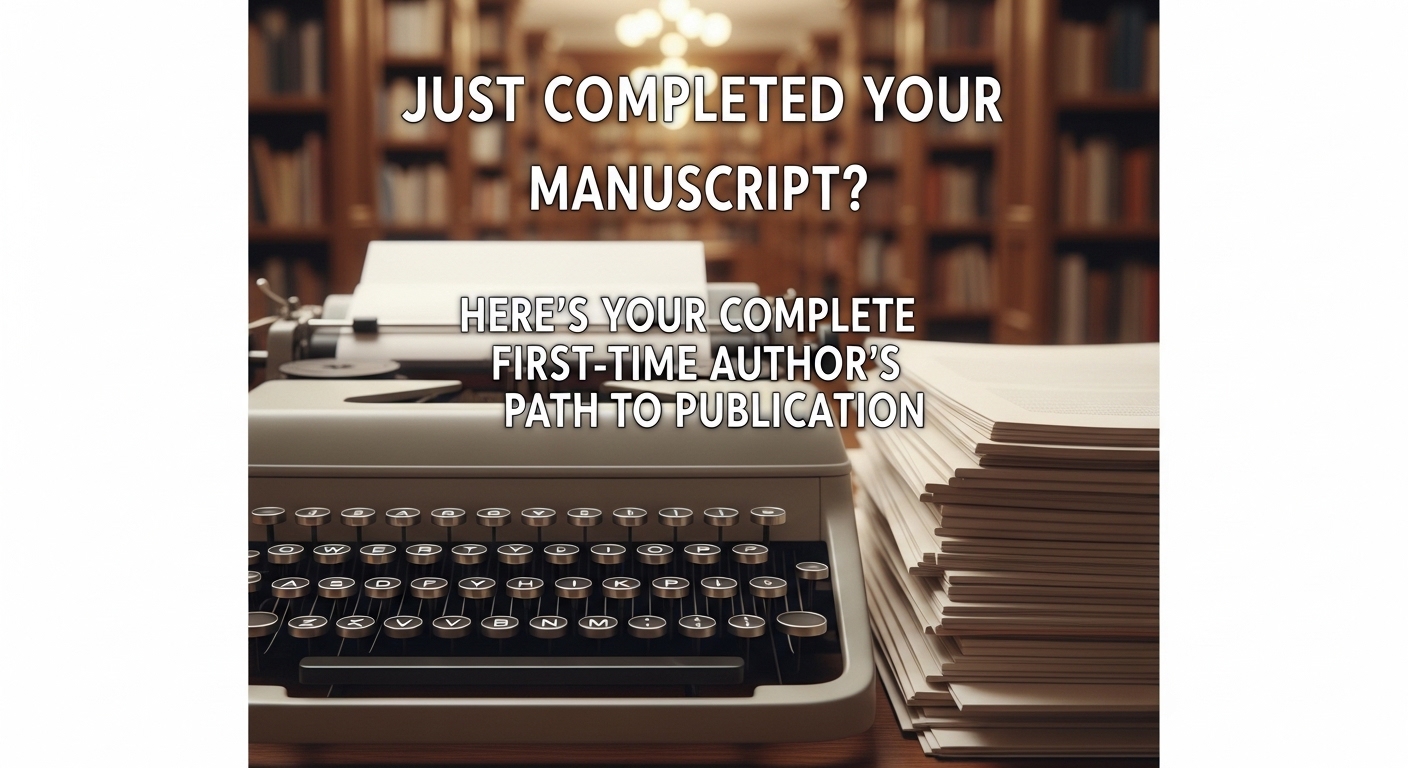
The moment you type “The End” is unlike any other. Your heart races, your fingers tremble slightly on the keys, and for a second, the world feels still. You’ve done it—you’ve transitioned from someone who wants to write a book to someone who has written one. But as the initial rush of adrenaline fades, a new, slightly more daunting realization sets in: what on earth do you do now? For many first-time authors, the transition from the private world of writing to the public world of publishing feels like stepping into a foreign country without a map.
This guide is designed to be that map. Whether you dream of seeing your name on a hardcover in a local bookstore or want to hit the “publish” button on a digital platform and reach readers worldwide, the path forward requires a shift in mindset. We are going to move away from the creative solitude of drafting and into the practical, step-by-step process of refining, packaging, and launching your work. You’ll learn how to polish your prose, choose the right publishing route for your specific goals, and build a presence that helps readers find you. By the end of this post, that “What’s next?” feeling will be replaced by a clear, actionable plan to get your story into the hands of the people waiting to read it.
Key Takeaways
- The Power of the “Cooling Off” Period: Why walking away from your manuscript is the best thing you can do for its quality.
- Editing is a Multi-Stage Process: Understanding the difference between big-picture structural changes and fine-tuning your grammar.
- Choosing Your Path: A look at the pros and cons of traditional publishing versus taking the reins yourself through self-publishing.
- The Importance of Professional Packaging: Why cover design and formatting are the “handshake” between you and your reader.
- Building an Author Platform: How to start connecting with your audience before your book even hits the shelves.
- The Long Game: Treating your book launch as a marathon, not a sprint, to ensure lasting success.
The Big Question
You’ve spent months—maybe years—poured into these pages, but have you stopped to wonder if your story is truly ready to stand on its own, or is it still just a reflection of your own thoughts? It’s a vulnerable feeling, realizing that the story you love might need to change significantly before a stranger loves it, too.
Step 1: The Essential “Cooling Off” Phase
Before you open a single editing tool or start researching agents, you must do something incredibly difficult: nothing. Close the document. Put the notebook in a drawer. Walk away for at least two to four weeks. When you have just finished a manuscript, you are too close to the words to see them clearly. You know what you meant to say, so your brain will automatically fill in gaps in logic or overlook missing descriptions because the full picture exists in your head.
By stepping away, you allow the details to blur slightly. When you return, you’ll be reading the manuscript with “fresh eyes,” almost like a stranger would. You’ll suddenly notice that a character’s motivation is thin in chapter three, or that you used the word “actually” twenty times in one scene. This distance is the only way to move from the role of the “creator” to the role of the “editor.” Use this time to read books in your genre, catch up on sleep, and celebrate the massive achievement of finishing a draft.
Step 2: Self-Editing and Structural Refinement
Once you return to your manuscript, your first pass should not be about commas or typos. Instead, focus on the “bones” of the story. This is known as developmental or structural editing. Read through the entire book and ask yourself the big questions: Does the middle of the book drag? Is the ending satisfying? Are there any “plot holes” that don’t make sense?
During this stage, don’t be afraid to be bold. Sometimes, a first-time author needs to cut a character who doesn’t serve the plot or combine two scenes into one to keep the pacing brisk. Think of this like building a house; there’s no point in picking out paint colors (word choice) if the foundation is cracked. Once the structure is solid, you can do a second pass focused on “line editing”—improving the flow of sentences, Varying sentence length, and ensuring your “voice” is consistent throughout.
Step 3: Getting Outside Feedback
Writing is a solitary act, but publishing is a social one. Before you spend money on professional services or start pitching to industry pros, you need “Beta Readers.” These are not your mother or your best friend (who will likely tell you it’s great regardless). These should be people who read heavily in your genre and can give you honest, constructive feedback.
Ask your beta readers specific questions: “Where did you get bored?” or “Which character did you like the least?” Their responses will show you where the “common reader” might struggle. You don’t have to take every piece of advice they give, but if three different readers tell you the beginning is too slow, it’s a sign you have work to do. This stage is about stress-testing your manuscript to ensure it’s ready for the professional world.
Need a Professional Eye?
If you feel like you’ve taken your manuscript as far as you can on your own, it might be time to Hire Experts. Professional editors can provide a level of polish that is hard to achieve solo, ensuring your book meets industry standards from the very first page. Get Started Today by researching editors who specialize in your specific genre.
Step 4: Deciding on Your Publishing Route
This is a fork in the road for every first-time author. You essentially have two main paths: Traditional Publishing or Self-Publishing. In traditional publishing, you find a literary agent who then sells your book to a publishing house. The publisher handles the editing, design, and distribution, and they pay you an advance. The downside? It is highly competitive, moves very slowly, and you lose a significant amount of creative control.
Self-publishing, on the other hand, gives you total control and a much higher percentage of the royalties. You are the CEO of your book. You decide when it launches, what the cover looks like, and how it’s marketed. However, this means you are responsible for the costs of production. You must ensure the book looks and feels as professional as a traditionally published one, or readers will pass it by. Neither path is “better”—it simply depends on whether you value the prestige and support of a big house or the speed and control of doing it yourself.
Step 5: Professional Packaging and Formatting
If you choose to self-publish, or even if you are preparing a proposal for an agent, presentation is everything. For self-published authors, the two most important investments are a professional cover designer and a professional formatter. Readers do judge books by their covers. A DIY cover often looks amateurish and signals to the reader that the writing inside might be amateurish, too.
Formatting is equally vital. This involves making sure the interior of your book looks right on an e-reader or in print—things like font size, margins, and chapter headings. A well-formatted book disappears while the person is reading; a poorly formatted one is a constant distraction. Your goal is to make sure there are zero barriers between your story and your reader’s imagination.
Step 6: Building Your Author Presence
You don’t want to start looking for readers on the day your book comes out. You should start building a “platform” months in advance. This sounds fancy, but it really just means creating a way for people to find you. This could be a simple website with your bio and a “Coming Soon” page, or an active presence on a social media platform where other readers and writers hang out.
The most valuable tool in an author’s kit is an email list. Start a newsletter where you share updates on your writing journey, sneak peeks of your cover, or even short stories. Unlike social media, where an algorithm decides who sees your posts, an email list is a direct line to your most loyal fans. When your book finally launches, these are the people who will buy it on day one.
Ready to Share Your Story?
Taking the leap into the public eye can be intimidating, but you don’t have to do it alone. If you’re looking for guidance on how to navigate these final steps, Contact Us to learn more about how to streamline your journey from writer to published author.
Common Mistakes to Avoid
One of the biggest pitfalls for first-time authors is rushing the process. There is a natural urge to get the book out into the world as soon as the draft is done, but speed is often the enemy of quality. Publishing a “mediocre” version of your book too early can damage your reputation before it even begins. Another common error is failing to understand the “market.” While you should always write the story of your heart, publishing is a business. If you don’t know who your target reader is or what other books are similar to yours, it will be incredibly difficult to market your work effectively. Finally, many authors ignore the importance of a good “blurb”—the descriptive text on the back of the book. If your blurb is a dry summary rather than an exciting hook, readers won’t even bother to look at the first chapter.
Tools, Resources, or Platforms You Can Use
- Drafting & Organizing: While many use standard word processors, tools like Scrivener help you organize long manuscripts into manageable chapters and store your research in one place.
- Grammar & Clarity: Platforms like ProWritingAid or Grammarly are excellent for catching repetitive words and basic errors, though they should never replace a human editor.
- Self-Publishing Distribution: Amazon KDP (Kindle Direct Publishing) is the largest platform for reaching ebook and print-on-demand readers. For wider distribution to other stores like Apple Books or Barnes & Noble, services like Draft2Digital are very user-friendly.
- Design Tools: For those on a tight budget who want to create social media graphics or simple promotional materials, Canva offers easy-to-use templates that look great.
Pro Tips for Better Results
- Read Your Work Out Loud: This is the fastest way to find “clunky” dialogue and awkward phrasing. If you run out of breath reading a sentence, it’s too long.
- Master the “Elevator Pitch”: Can you describe your book in one exciting sentence? If not, you don’t understand your hook well enough yet. Practice this until it’s second nature.
- Focus on the First Five Pages: Whether it’s an agent or a customer on Amazon, you usually have about five pages to hook them. Make sure your story starts with a compelling moment, not a long description of the weather.
- Network with Other Authors: Writing doesn’t have to be lonely. Join writing groups or online forums. The advice and support from people who are one step ahead of you are invaluable.
Conclusion
The path from a finished manuscript to a published book is a journey of transformation. It requires you to wear many hats: the visionary writer, the ruthless editor, and the savvy businessperson. While the technical steps of formatting, choosing a platform, and marketing are essential, the most important trait you can carry with you is persistence.
The publishing industry is full of hurdles, from critical feedback to the complexities of distribution. However, every legendary author started exactly where you are right now—standing over a pile of pages, wondering if anyone would ever read them. By following a structured path, seeking professional help where it counts, and staying true to your creative voice, you can navigate this process successfully. Your story has value, and there is an audience out there waiting to discover it. Now is the time to take that first step forward and turn your manuscript into a masterpiece.
Frequently Asked Questions
1. How long should my first book be?
It depends on the genre. Most contemporary novels are between 70,000 and 90,000 words. Fantasy and Sci-Fi can be longer, while Young Adult and Memoirs are often a bit shorter.
2. Is it expensive to self-publish?
It can be as cheap or expensive as you make it. While the platform to publish is often free, you should ideally budget for a professional cover and basic editing to ensure a quality product.
3. Do I need an agent to get published?
If you want to go with a major “Big Five” publisher, yes, you almost always need an agent. If you are self-publishing or working with some smaller independent presses, you can represent yourself.
4. How do I protect my book from being stolen?
Technically, your work is copyrighted the moment you create it. For extra peace of mind, you can formally register your copyright through government channels, but “theft” of manuscripts is much rarer than most new authors fear.
5. How long does the publishing process take?
Traditional publishing usually takes 12 to 24 months from the time you sign a contract. Self-publishing can be done in a matter of weeks, though a few months of preparation is recommended for the best results.


