


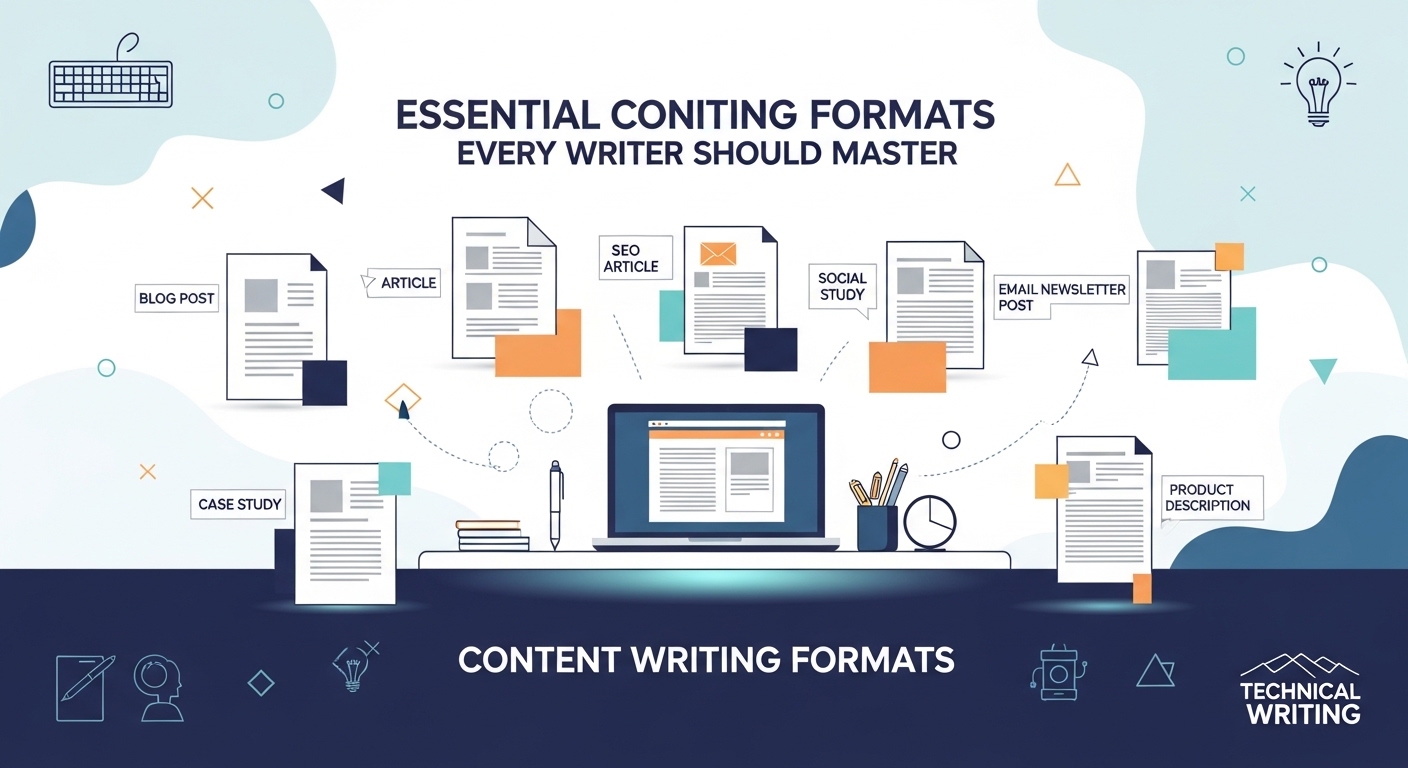
Content writing has evolved into a discipline that blends creativity with structure. It’s no longer enough to simply have good ideas—those ideas must be presented in a way that is easy to follow, engaging to read, and aligned with how modern audiences consume information.
One of the biggest distinctions between average and high-performing content lies in formatting. A well-structured article does more than organize thoughts—it shapes the reader’s journey. It determines how quickly someone understands your message, how long they stay on the page, and whether they leave feeling informed or confused.
Writers who understand content writing formats gain a strategic advantage. They can adapt their approach depending on the topic, audience, and purpose, ensuring their content is not only readable but also impactful and search-friendly.
This guide explores the essential content writing formats every writer should master, with a deep focus on how each format works, why it matters, and how to execute it effectively.
Why Content Writing Formats Matter in Modern Writing
Before exploring specific formats, it’s important to understand why structure plays such a critical role in content writing today.
The Shift in Reader Behavior
Modern readers rarely approach content with the intention of reading every word. Instead, they scan headings, skim paragraphs, and look for sections that immediately address their needs. This behavior has reshaped how content must be written and presented.
If your article lacks structure, readers will struggle to navigate it. Even valuable insights can be overlooked simply because they are buried within dense, unorganized text. On the other hand, well-formatted content allows readers to quickly identify relevant sections and engage more deeply with the material.
The Impact of Structure on SEO
Search engines rely heavily on structure to understand content. Headings, subheadings, and logical organization help algorithms determine what your content is about and how relevant it is to specific queries.
Using clear H2 and H3 headings, along with naturally integrated keywords and semantic variations, improves both visibility and ranking potential. However, it’s important to remember that SEO should support readability—not compromise it. Content that is optimized for both humans and search engines performs best.
The List-Based Format (Listicles)
The list-based format is one of the most recognizable and widely used approaches in content writing. While it is often associated with quick, easy reads, it can also be developed into highly detailed and valuable content when executed properly.
Why List-Based Content Works So Well
The effectiveness of listicles comes from their clarity. Readers immediately understand what they will gain from the content. A headline that promises “10 Essential Formats” sets clear expectations and reduces uncertainty.
This format is particularly useful for organizing multiple ideas under a single theme. Instead of presenting information in a long, continuous narrative, it breaks content into distinct sections, each focusing on a specific concept.
Moving Beyond Basic Lists
The biggest mistake writers make with this format is keeping each point too brief. A strong list-based article treats each item as a mini-section rather than a quick mention.
For example, instead of simply naming a format, a well-developed list will:
- Explain what the format is
- Describe when to use it
- Provide insights into why it works
This layered approach transforms a simple list into a comprehensive resource that offers real value.
A how-to guide is equally important. Each section should build naturally on the previous one, creating a sense of progression that leads the reader toward a clear and achievable outcome.
The Problem-Solution Format
The problem-solution format is highly effective because it connects with readers on a personal level. It begins by identifying a challenge and then provides a structured approach to resolving it.
Creating a Strong Emotional Connection Through Problems
The success of this format depends on how well the problem is defined. A vague or generic problem will fail to capture attention. A well-articulated problem, however, resonates immediately.
This involves exploring not just the issue itself, but also its impact. How does it affect the reader? Why does it matter? What are the consequences of ignoring it?
By answering these questions, the content becomes more relatable and engaging.
Delivering Solutions That Feel Practical and Achievable
Once the problem is established, the solution must feel both relevant and actionable. It should address the root cause rather than offering superficial advice.
A strong solution is:
- Specific rather than generic
- Practical rather than theoretical
- Clear rather than overly complex
This approach ensures that readers leave with a sense of direction rather than confusion.
The Storytelling Format
Storytelling is a powerful tool that adds depth and emotional resonance to content writing. While many formats focus on delivering information, storytelling focuses on creating connection.
Why Storytelling Enhances Engagement
Stories are inherently engaging because they mirror real-life experiences. They provide context, evoke emotions, and make abstract ideas more tangible. In content writing, storytelling can transform a dry topic into something compelling and memorable. It helps readers visualize concepts and relate them to their own experiences.
Using Storytelling Without Losing Focus
The key to effective storytelling is balance. The narrative should support the main idea, not overshadow it. For example, instead of presenting a long, unrelated story, a writer might use a short scenario to illustrate a concept. This keeps the content focused while still benefiting from the emotional impact of storytelling. When used correctly, storytelling not only improves engagement but also strengthens the overall message.
The Comparison Format
The comparison format is designed to help readers evaluate options and make informed decisions. It is particularly useful in topics where multiple approaches or strategies exist.
Simplifying Complex Choices
One of the main strengths of this format is its ability to simplify decision-making. Instead of forcing readers to gather information from multiple sources, it presents everything in a structured and easy-to-understand manner.
This is especially valuable in content writing, where readers often look for clear guidance.
Providing Depth Alongside Structure
While tables and side-by-side comparisons can improve clarity, they should not replace detailed explanations. Each comparison point should be supported by paragraphs that provide context and insight.
For example, explaining why one format works better for beginners while another suits advanced writers adds depth and practical value.
The Ultimate Guide Format
The ultimate guide format is one of the most comprehensive approaches in content writing. It aims to cover a topic in full detail, making it a go-to resource for readers.
Building Authority Through Comprehensive Content
An ultimate guide is designed to answer all major questions related to a topic. It doesn’t just introduce concepts—it explores them thoroughly. This level of detail builds trust and positions the writer as a reliable source of information.
Maintaining Readability in Long-Form Content
One of the biggest challenges in creating an ultimate guide is maintaining readability. Long content can easily become overwhelming if not structured properly. This is where headings, subheadings, and logical flow become essential. Breaking content into clearly defined sections ensures that readers can navigate it بسهولة and stay engaged throughout.
The Opinion and Editorial Format
Opinion-based content allows writers to present unique perspectives and interpretations. It adds personality and depth to content writing.
The Importance of a Clear Perspective
A strong opinion piece is built around a clear and confident viewpoint. It doesn’t attempt to cover every angle equally—instead, it takes a position and supports it with reasoning. This makes the content more engaging and thought-provoking.
Supporting Opinions with Logic and Insight
While opinion content is subjective, it should still be grounded in logic and evidence. Unsupported opinions can feel weak or unconvincing. A well-structured editorial balances personal voice with informative value, creating content that is both engaging and credible.
The How-To Guide Format
The how-to guide format is one of the most useful and practical structures in content writing. It focuses on helping the reader complete a task step by step. Unlike general informational writing, this format is action-oriented. It doesn’t just explain a topic—it shows the reader how to actually do something from start to finish.
This is why how-to content performs so well online. People usually search for solutions when they are stuck or trying to achieve something specific. A good how-to guide gives them direction, clarity, and confidence to move forward without confusion.
Understanding the Purpose of How-To Content
The main purpose of how-to writing is to solve a problem in a clear and structured way. When a reader lands on a how-to article, they are expecting simple guidance that takes them from point A to point B without unnecessary difficulty. That means the writer’s job is not just to explain the topic but to make the process feel easy and manageable. Every part of the content should reduce confusion rather than add to it.
A strong how-to guide usually does three things: It explains what the reader is going to achieve, it breaks the process into clear steps, and it makes sure each step is easy to understand and follow.
Why How-To Guides Work So Well
How-to guides are effective because they match exactly what the reader is looking for. When someone types a question like “how to write a blog” or “how to create content,” they are not looking for theory. They want action.
This format works because it feels direct and useful. It saves time for the reader by organizing information in a logical order instead of overwhelming them with scattered ideas.
Another reason it works is clarity. A well-written guide removes guesswork. The reader doesn’t have to figure things out on their own because the content already leads them step by step.
Structuring a Simple and Effective How-To Guide
A good how-to guide follows a natural flow. It usually starts with a short introduction, then moves into steps, and ends with a conclusion or result. The introduction should clearly explain what the guide is about and what the reader will learn. It should not be too long, but it should create a clear expectation. After that comes the main part: the steps. This is where the real value is delivered.
Each step should focus on one idea at a time. If too many ideas are mixed together, the reader can easily get confused. Keeping steps clear and separated helps maintain smooth reading. For example, instead of giving vague instructions, a strong guide explains each action in detail. If a step says “choose a topic,” it should also explain how to choose it, what factors to consider, and why it matters.
Building Clarity Inside Each Step
One of the most important parts of a how-to guide is clarity inside every step. This means each step should not just tell the reader what to do, but also help them understand how to do it properly.
Good how-to writing always includes explanation, not just instruction. This is what makes the content helpful instead of shallow.
For example, if a step involves research, the content should explain what kind of research is needed, where to find information, and what mistakes to avoid. This makes the step more practical and realistic. At the same time, the explanation should not become too complicated. The goal is always simplicity. The reader should feel guided, not overwhelmed.
Maintaining a Smooth Flow
Flow is what makes a how-to guide feel easy to read. When ideas are connected properly, the reader can move from one step to the next without feeling lost. Each step should naturally lead into the next one. For example, after choosing a topic, the next step might be researching it. After research comes structuring, and after structuring comes writing. This logical order is important because it mirrors how tasks are actually done in real life. When content follows this natural progression, it feels more practical and believable. A smooth flow also means avoiding sudden jumps in difficulty. The guide should gradually build understanding so the reader feels more confident as they progress.
Keeping the Content Reader-Friendly
A how-to guide should always prioritize readability. Even if the topic is complex, the explanation should be simple and easy to follow. Short paragraphs help a lot because they make the content less intimidating. Each paragraph should focus on one idea so the reader can absorb information comfortably. It also helps to avoid unnecessary complexity in language. The goal is not to sound advanced but to be understood easily. The clearer the writing, the more useful the guide becomes.
The Case Study Format
Case studies bring practical application into content writing by showing how ideas work in real-world scenarios.
Why Case Studies Are Highly Effective
Readers trust examples more than explanations. A case study demonstrates results, making the content more believable and useful.
Structuring a Compelling Case Study
A strong case study follows a clear narrative:
- It begins with context, explaining the situation
- It introduces a problem or challenge
- It describes the solution implemented
- It presents the results achieved
This structure creates a logical flow that is easy to follow and highly informative.
The FAQ Format
The FAQ section is a valuable addition to any blog post, especially for improving SEO and user experience.
Addressing Reader Questions Directly
FAQs allow writers to answer specific questions that may not fit naturally within the main content. This makes the article more comprehensive and user-focused.
Enhancing Search Visibility
By incorporating common search queries, FAQs help capture additional traffic and improve overall content performance.
Conclusion
Mastering essential content writing formats is not about following rigid rules—it’s about understanding how structure influences readability, engagement, and effectiveness.Each format serves a different purpose. Some guide readers through processes, others help them make decisions, and some simply aim to inform or inspire. The key is knowing when and how to use each one. As you develop your writing skills, focus on experimenting with different formats and refining your approach. Over time, you’ll build the ability to structure content in a way that feels natural, engaging, and impactful.
Frequently Asked Questions (FAQs)
What are content writing formats?
Content writing formats are structured approaches used to organize and present information clearly and effectively. They help improve readability and ensure that ideas are communicated logically.
Why are H2 and H3 headings important?
H2 and H3 headings improve content structure by breaking it into sections and sub-sections. This makes it easier for readers to navigate and helps search engines understand the content better.
Which format is best for SEO?
How-to guides and ultimate guides are particularly effective for SEO because they align with user intent and provide comprehensive information.
Can beginners use advanced content formats?
Yes, but it’s best to start with simpler formats like listicles and how-to guides before moving to more complex structures like case studies and editorials.
How can I improve my content formatting skills?
Practice is key. Analyze well-structured articles, experiment with different formats, and focus on creating clear, logical flows in your writing.


