


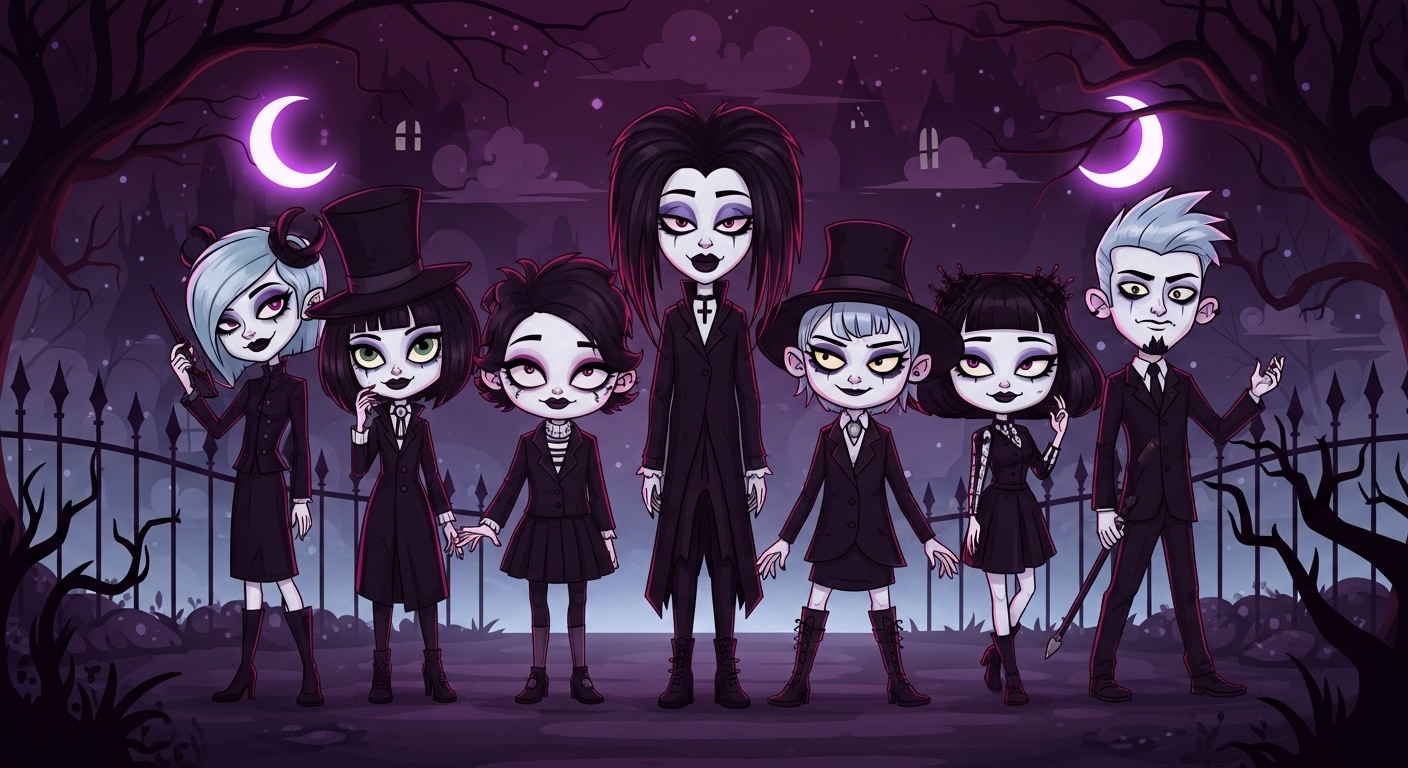
What Defines a Goth Cartoon Character?
Before diving into specific figures, it’s important to understand what “goth” means in the context of animation. While the term originates from a real-world subculture, its cartoon adaptation blends visual style with personality traits.
A goth cartoon character typically embodies the following:
- A dark or monochromatic aesthetic (black clothing, pale tones, bold contrasts)
- A preference for solitude or introspection
- A dry, sarcastic, or deadpan sense of humor
- An affinity for the macabre, mysterious, or supernatural
- Emotional depth often hidden beneath a detached exterior
However, the most compelling characters go beyond stereotypes. They are layered, complex, and often serve as emotional anchors within their narratives.
The Cultural Appeal of Goth Characters in Animation
Goth characters resonate because they offer contrast. In worlds filled with exaggerated optimism or chaotic humor, they introduce stillness, irony, and perspective. They often act as observers—characters who see through illusions and challenge superficial norms. Their appeal also lies in relatability. Many viewers connect with feelings of being misunderstood, introspective, or different. Goth characters give voice to those emotions without necessarily romanticizing them.
Additionally, their visual design plays a crucial role. Animation thrives on strong silhouettes and recognizable traits, and goth aesthetics—dark palettes, sharp lines, and expressive minimalism—translate exceptionally well on screen.
Iconic Goth Cartoon Characters That Defined the Genre
Wednesday Addams – The Original Queen of Deadpan Darkness
Few characters embody gothic charm as perfectly as Wednesday Addams. Originating from The Addams Family, Wednesday has become a cultural icon across generations.
Her defining traits include:
- Emotionless delivery of dark humor
- Fascination with morbid topics
- Quiet intelligence and confidence
What makes Wednesday enduring is her consistency. She doesn’t evolve to fit the world—the world reacts to her. This unwavering identity has made her one of the most recognizable goth characters in animation and beyond.
Raven – Darkness with Emotional Depth
From Teen Titans, Raven represents a more modern and emotionally layered interpretation of goth identity.
As a half-demon struggling to control her powers, Raven’s darkness is both literal and symbolic. Her character explores:
- Emotional suppression and internal conflict
- The fear of losing control
- The balance between isolation and connection
Unlike purely comedic goth characters, Raven’s storylines often delve into psychological and emotional themes, making her deeply relatable to audiences.
Sam Manson – The Activist Goth
Sam Manson from Danny Phantom brings a unique twist to the goth archetype. While she embraces the aesthetic, her personality is driven by strong convictions.
She is:
- Passionate about environmental and social issues
- Fiercely independent
- Loyal and outspoken
Sam challenges the idea that goth characters are detached or apathetic. Instead, she channels her individuality into activism and purpose.
Gaz Membrane – Minimalism Meets Chaos
Gaz Membrane from Invader Zim represents a subtler, more comedic take on goth characterization.
Her defining features include:
- Monotone speech and emotional detachment
- Disinterest in social norms
- A surprising capacity for intensity when provoked
Gaz’s humor lies in contrast—her calm demeanor juxtaposed with the absurd chaos around her. She doesn’t seek attention, yet she commands it effortlessly.
Marceline the Vampire Queen – Goth Meets Musical Expression
From Adventure Time, Marceline blends gothic aesthetics with artistic expression.
As a vampire and musician, she embodies:
- Emotional vulnerability beneath a cool exterior
- A deep connection to music as self-expression
- Themes of immortality and loneliness
Marceline’s character demonstrates how goth identity can evolve. She isn’t confined to darkness—she uses it as a canvas for creativity and growth.
Mavis Dracula – A Modern, Playful Goth Icon
Appearing in Hotel Transylvania, Mavis Dracula offers a lighter, more approachable take on goth aesthetics.
While she retains classic elements like dark clothing and a supernatural background, her personality is:
- Curious and adventurous
- Optimistic yet independent
- Emotionally expressive
Mavis reflects how goth influences have become more mainstream, blending darkness with warmth and humor.
Emily the Strange – Indie Goth Influence in Animation
Though not tied to a single mainstream cartoon, Emily the Strange has influenced animated aesthetics and character design across various media.
She represents:
- Pure individuality and nonconformity
- A minimalist yet striking visual style
- A strong sense of self without external validation
Emily’s impact extends beyond animation into fashion and subculture, reinforcing the crossover between goth identity and visual storytelling.
The Evolution of Goth Characters in Cartoons
Goth cartoon characters have evolved significantly over time. Early representations, like Wednesday Addams, leaned heavily on humor and shock value. Over time, characters became more nuanced, reflecting changing audience expectations.
Modern goth characters often:
- Explore mental health and emotional complexity
- Balance darkness with humor and relatability
- Challenge stereotypes associated with the subculture
This evolution mirrors broader cultural shifts. Audiences now seek authenticity and depth, and animation has responded by creating characters who feel real, even in fantastical settings. In addition, writers now invest more time in character backstories, motivations, and interpersonal dynamics, allowing goth characters to evolve naturally within long-running story arcs.
Why Goth Characters Continue to Resonate
The enduring popularity of goth cartoon characters can be attributed to several factors:
Authenticity in a Conformist World
These characters often reject societal expectations, making them symbols of individuality.
Emotional Complexity
They provide a space for exploring themes like loneliness, identity, and inner conflict.
Visual Distinction
Their design ensures they stand out in any scene, making them instantly recognizable.
Subtle Humor
Their dry wit and deadpan delivery offer a different kind of comedy—one that relies on timing and contrast rather than exaggeration.
Beyond these traits, their consistency across different storylines helps build trust with audiences. Viewers come to appreciate their predictable yet comforting presence, especially in chaotic or exaggerated animated worlds where stability is rare.
Influence on Modern Animation and Pop Culture
Goth characters have influenced not just storytelling but also visual trends in animation. Their aesthetic has inspired:
- Character design in indie animation
- Fashion trends tied to alternative subcultures
- Narrative themes centered on outsider perspectives
They’ve also contributed to the normalization of alternative identities in mainstream media, making animation more inclusive and diverse. Furthermore, their presence has encouraged creators to experiment with darker tones, hybrid genres, and unconventional protagonists, ultimately expanding the creative boundaries of modern animated storytelling.
Frequently Asked Questions (FAQ)
What makes a cartoon character “goth”?
A combination of visual style, personality traits, and thematic elements—typically involving dark aesthetics, introspection, and a connection to the macabre.
Are goth cartoon characters always serious?
Not at all. Many, like Gaz Membrane, use humor as a defining trait. The tone can range from comedic to deeply emotional.
Why are goth characters so popular?
They resonate with audiences who value individuality and emotional depth, and they provide contrast within animated worlds.
Do goth characters only appear in fantasy settings?
No. While many exist in supernatural or fantasy contexts, others are grounded in more realistic environments.
How have goth characters changed over time?
They’ve become more complex and relatable, moving beyond stereotypes to explore deeper emotional and psychological themes.
Final Thoughts
Goth cartoon characters are more than just dark clothing and brooding expressions—they are storytellers in their own right. They bring balance to animated worlds, offering perspectives that challenge, intrigue, and resonate. From the quiet intensity of Raven to the iconic deadpan of Wednesday Addams, these characters continue to shape animation in meaningful ways. Their enduring appeal lies in their ability to be unapologetically themselves—dark, dazzling, and unforgettable.


