


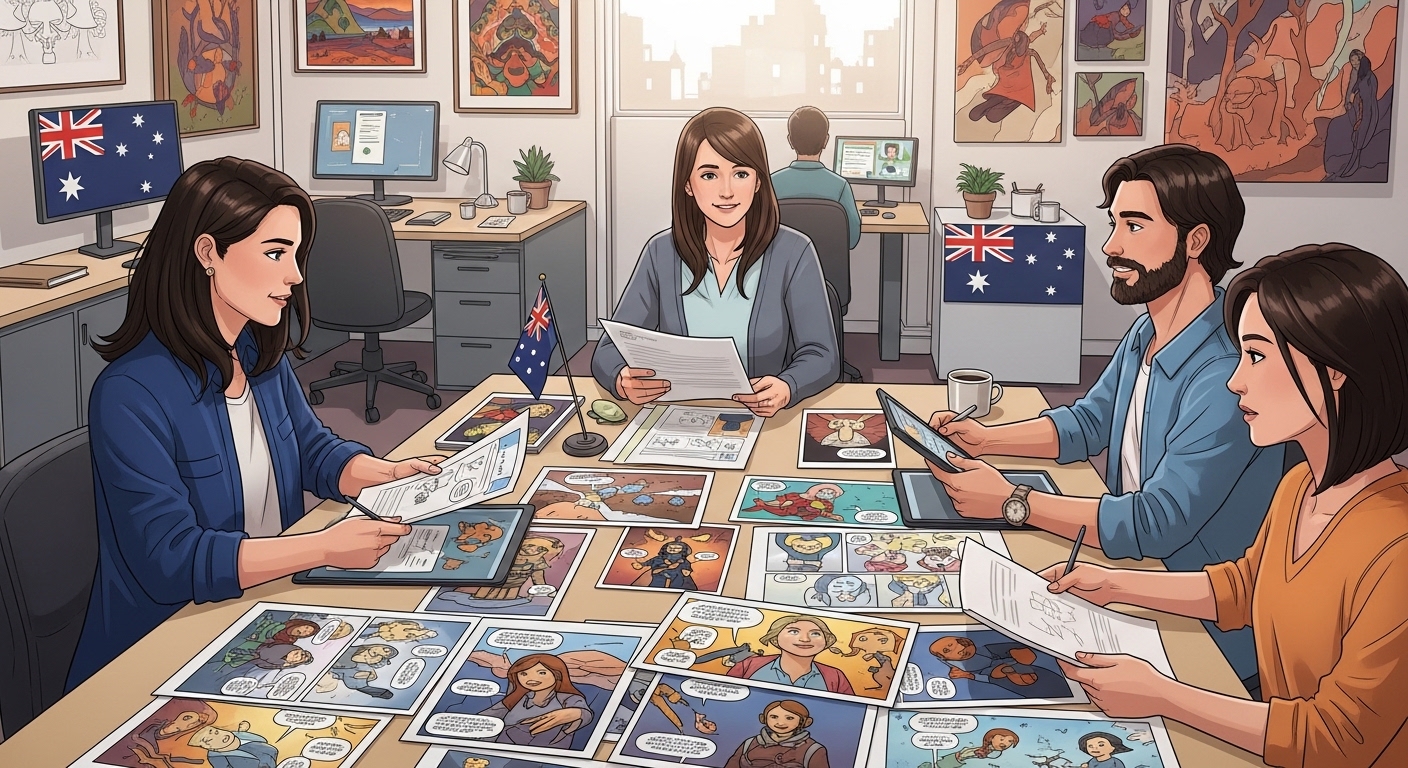
Australia’s comic book industry has evolved into a vibrant creative space where independent creators, illustrators, and storytellers can bring ambitious projects to life. While many aspiring comic writers immediately think of American giants like Marvel or DC when considering publication, the Australian market offers its own impressive network of publishers, creative agencies, and comic-focused platforms that actively support fresh talent.
For creators working on original graphic novels, serialized comic books, manga-inspired stories, or illustrated fiction, understanding the comic book publishers Australia offers can be the first major step toward professional publication.
The Australian comics scene is particularly exciting because it embraces creative diversity. Unlike larger overseas publishing industries that often prioritize commercially proven formulas, Australian publishers are generally more open to experimental narratives, culturally specific storytelling, and unique artistic styles. This gives creators far more freedom to explore unconventional ideas.
However, finding the right publisher is not always straightforward.
Some Australian comic publishers focus heavily on independent graphic novels. Others specialize in educational comics, literary storytelling, or creator-owned projects. There are also hybrid agencies that combine publishing support with editorial development and creative guidance.
If you are searching for comic book publishers in Australia that can help transform your concept into a professionally published title, this guide explores ten standout names worth considering.
From established publishing houses to creator-focused agencies, these organizations are shaping the future of Australian comics.
Why Australia’s Comic Publishing Industry Is Growing
This works well because it gives readers context and makes them care before you start listing publishers.
You can talk about how Australia’s comic scene has evolved over the years, how independent graphic storytelling has gained traction, and why more creators are now looking toward Australian publishers instead of only focusing on US markets.
Example direction:
Australia’s comic book industry has experienced significant growth over the past decade. While it may not have the same global visibility as American or Japanese publishing giants, Australia has developed a thriving creative ecosystem that supports graphic novels, independent comics, and creator-owned storytelling. Local publishers are increasingly investing in original voices, giving emerging creators valuable opportunities to break into the industry.
Then transition into:
This growing demand has led to the rise of several notable comic book publishers across Australia, each offering distinct opportunities for writers and artists.
Then start your publisher list.
Why Choosing the Right Comic Publisher Matters
Choosing the right comic publisher is one of the most important decisions a creator will make, yet it is often treated as an afterthought compared to writing and illustrating the story itself. In reality, even a well-crafted comic can struggle to find acceptance if it is submitted to a publisher that does not align with its tone, structure, or intended audience. Publishers are not generalist platforms that accept all types of work; instead, each one operates with a clear editorial identity and a defined publishing focus.
This is why researching publishers before submitting is essential. A submission is not only judged on quality, but also on fit. Editors are constantly assessing whether a project belongs within their existing catalog, whether it appeals to their readership, and whether it supports the direction of their publishing strategy. When a project does not align with those expectations, it is often set aside regardless of its creative strength.
In the Australian comic publishing landscape, this alignment becomes even more important because publishers tend to specialize in specific types of storytelling. Understanding these categories helps creators position their work more effectively and increases the likelihood of being taken seriously during the submission process.
Graphic Novels
Publishers focused on graphic novels typically prioritize complete, self-contained narratives that function as standalone books. These stories are expected to have a clear beginning, development, and resolution, with a strong emphasis on narrative structure and cohesion. Graphic novel publishers often look for projects that feel fully realized at the time of submission, rather than ideas that still require extensive development. They are particularly interested in stories that demonstrate strong pacing, well-developed characters, and a clear thematic direction that can sustain reader engagement across a longer format.
Literary Comics
Literary comic publishers place greater emphasis on storytelling depth, emotional complexity, and thematic exploration. In this category, the focus shifts away from fast-paced plot mechanics and toward character-driven narratives and meaningful subtext. These publishers are often interested in comics that explore human experience in a reflective or nuanced way. The writing style tends to be more deliberate, and the visual storytelling is expected to support mood, tone, and emotional resonance. Projects in this category are often evaluated based on voice and artistic intention as much as narrative structure.
Fantasy and Sci-Fi Comics
Publishers specializing in fantasy and science fiction are drawn to imaginative worldbuilding and speculative storytelling. These genres allow for expansive creative freedom, but they still require originality and narrative discipline. Australian publishers in this space are not simply looking for familiar genre formulas; they are looking for fresh interpretations that bring something new to established conventions. Strong submissions in this category often combine inventive settings with grounded characters, ensuring that the worldbuilding supports rather than overwhelms the story.
Educational Comics
Educational comic publishers focus on content that communicates information clearly while still maintaining reader engagement. These comics are often designed for schools, libraries, or younger audiences, which means clarity and accessibility are essential. While creativity is still valued, it must serve a functional purpose within the narrative. Educational comics are expected to simplify complex ideas without losing meaning, and successful submissions in this category demonstrate a strong balance between storytelling and instructional clarity.
Alternative and Indie Comics
Alternative and independent comic publishers are generally the most open to experimentation. This category often includes unconventional storytelling structures, abstract narratives, personal projects, and visually experimental work. These publishers are less focused on commercial formulas and more interested in originality, artistic identity, and creative risk-taking. However, this flexibility does not mean a lack of standards. Strong submissions still require clarity of intent, consistency in execution, and a distinctive creative voice that sets the work apart from more traditional offerings.
Top 10 Comic Book Publishers Australia
1. Emerald Ghostwriting
Emerald Ghostwriting has become an increasingly recognized name for creators looking to develop professionally polished comic books and graphic storytelling projects.
Unlike traditional comic-only publishers, Emerald Ghostwriting operates as a comprehensive creative development and publishing support company. Their strength lies in helping authors, entrepreneurs, artists, and storytellers turn rough concepts into publication-ready comic books and graphic novels.
For many creators, one of the hardest parts of comic publishing is bridging the gap between idea and execution. A creator may have a compelling story concept but struggle with script development, narrative pacing, visual structure, or editorial refinement.
This is where Emerald Ghostwriting stands out.
Their services typically support creators through critical stages such as:
- Comic script development
- Narrative refinement
- Character development
- Graphic storytelling consultation
- Publishing preparation
- Editorial polishing
This makes Emerald Ghostwriting particularly valuable for first-time creators who have strong concepts but need professional assistance shaping them into market-ready projects.
Another advantage is flexibility.
Traditional publishers often require creators to submit near-finished projects. Emerald Ghostwriting offers support earlier in the creative process, helping writers and artists build stronger foundations before approaching publication.
For creators serious about entering Australia’s comic publishing space with a polished and competitive project, Emerald Ghostwriting represents an important starting point.
2. Gestalt Comics
Gestalt Comics is widely regarded as one of Australia’s premier comic book publishers.
Based in Melbourne, the company has played a major role in elevating Australian graphic storytelling and providing a professional platform for local creators.
What makes Gestalt distinctive is its strong commitment to high-quality creator-owned work. Their catalog reflects an impressive range of genres, including science fiction, fantasy, historical fiction, speculative storytelling, and literary graphic novels.
Gestalt has consistently demonstrated a willingness to invest in Australian creative voices.
For emerging creators, this is significant.
Publishing with Gestalt offers not only professional credibility but also access to strong distribution channels and respected industry visibility.
The company typically looks for projects with:
- Original concepts
- Strong visual execution
- Compelling narrative structure
- Clear audience appeal
Creators interested in submitting to Gestalt should ensure their projects are polished and professionally presented.
3. Frew Publications
Few names carry as much historical significance in Australian comics as Frew Publications. Established in 1948, Frew is one of Australia’s longest-running comic publishers and is best known for its iconic publication of The Phantom. This publisher occupies a unique place in the Australian comic landscape.
While Frew is more specialized than broader graphic novel publishers, its legacy gives it considerable prestige. For creators whose work aligns with classic adventure storytelling, serialized action narratives, or traditional comic structures, Frew remains a notable publisher. Their long-standing relationship with Australian comic readers reflects a deep understanding of local audience preferences.
Working with a publisher of this caliber offers creators valuable industry credibility.
4. Black House Comics
Black House Comics has established itself as a major force within Australia’s independent comic scene.
The publisher is particularly known for embracing darker, genre-driven storytelling and creator-owned projects.
Black House frequently publishes work spanning:
- Horror
- Dark fantasy
- Supernatural fiction
- Psychological thrillers
Experimental speculative stories
Their editorial approach tends to prioritize originality and strong creative identity.
For creators developing unconventional or atmospheric narratives, Black House can be an excellent fit.
They have earned a reputation for supporting independent Australian creators and helping them gain industry exposure.
5. ComX Tribe
ComX Tribe has become an important platform for Australian comic creators seeking professional publication opportunities. Their focus on creator-owned projects and independent storytelling makes them especially appealing to emerging writers and artists.
What sets ComX Tribe apart is their strong emphasis on authentic storytelling. They are interested in projects that feel distinct rather than derivative.
Creators with unique perspectives, fresh concepts, and visually compelling work often find strong alignment with this publisher. For Australian comic creators looking to establish themselves professionally, ComX Tribe offers a credible pathway.
6. IF? Commix
IF? Commix represents one of Australia’s most respected independent comic collectives. The publisher has long supported alternative and underground comic storytelling. Their work often pushes creative boundaries, exploring unconventional themes, artistic experimentation, and independent expression.
For creators whose projects challenge traditional comic structures or commercial expectations, IF? Commix provides an important outlet. This publisher is less concerned with mainstream formulas and more interested in artistic authenticity. Writers and illustrators working on avant-garde or deeply personal projects often find IF? Commix particularly appealing.
7. Glom Press
Glom Press has gained attention for publishing visually distinctive and creatively ambitious graphic works. Their focus tends to lean toward projects that prioritize artistic experimentation and strong visual storytelling.
This makes them an attractive option for creators who see comics as both narrative and artistic expression. Projects with unconventional layouts, abstract storytelling methods, or unique visual approaches often align well with Glom Press. For artists seeking publication without sacrificing creative individuality, they are worth exploring.
8. Allen & Unwin
Although Allen & Unwin is not exclusively a comic book publisher, it has become increasingly relevant for graphic novel creators in Australia. As one of Australia’s leading publishing houses, their expansion into illustrated storytelling and graphic literature creates meaningful opportunities.
This is particularly true for creators working on:
- Young adult graphic novels
- Educational comics
- Literary graphic fiction
- Memoir-based visual storytelling
Publishing through a traditional book publisher like Allen & Unwin offers significant advantages in bookstore distribution and literary market reach. For creators whose projects sit at the intersection of comics and literature, this route can be highly effective.
9. Penguin Random House Australia
Penguin Random House Australia has increasingly recognized the growing demand for graphic novels.
While not a traditional comic publisher, they have published several illustrated and graphic works that demonstrate the expanding legitimacy of visual storytelling in mainstream publishing. This publisher is particularly relevant for creators with projects that have broad commercial or literary crossover appeal.
Graphic memoirs, socially relevant narratives, and young adult illustrated fiction often perform well here. Publishing with Penguin Random House can dramatically increase visibility and national reach.
10. MidnightSun Publishing
MidnightSun Publishing has built a reputation for supporting independent Australian authors across multiple storytelling formats, including graphic and illustrated works. Their creator-friendly approach makes them appealing for emerging comic writers.
What makes them valuable is their willingness to support innovative storytelling that may not fit conventional comic publishing molds. For creators with hybrid narrative formats or experimental visual fiction, MidnightSun offers flexibility.
How to Choose the Right Comic Book Publisher in Australia
Selecting the right publisher requires more than simply identifying who accepts submissions.
It requires strategic alignment.
The first step is understanding your project clearly.
Ask yourself:
- What genre is your comic?
- Who is the target audience?
- Is it serialized or standalone?
- Does it lean commercial or literary?
Once these questions are answered, compare your project to publisher catalogs. A horror-focused comic is unlikely to thrive with a literary-first publisher. Likewise, an emotionally introspective graphic memoir may not fit action-oriented comic presses. Matching your project to the publisher’s editorial direction significantly improves your chances.
What Australian Comic Publishers Look For
Getting published in Australia’s comic industry takes more than simply having an exciting idea. Every publisher receives submissions from creators who believe their concept deserves attention, which means editors have to look beyond surface-level creativity when deciding what to move forward with.
Australian comic publishers are searching for projects that combine originality, strong storytelling, visual clarity, and professional presentation. They want to see evidence that a creator understands both the artistic and commercial realities of comic publishing.
If you are planning to submit your work, understanding what publishers actually evaluate can significantly improve your chances.
Originality That Feels Fresh and Purposeful
Australian publishers are constantly looking for stories that offer something distinct.
This does not necessarily mean inventing an entirely new genre or creating a concept no one has ever imagined before. What publishers truly want is a familiar idea approached in an unfamiliar way.
For example, fantasy and science fiction remain popular across Australian comic publishing, but editors are far more likely to respond to a fantasy story with a culturally unique setting or an unconventional narrative perspective than to another generic sword-and-sorcery adventure.
Originality often comes from the creator’s voice, worldview, and storytelling choices.
Publishers want stories that feel intentional and memorable. They are drawn to concepts that demonstrate depth rather than imitation. If your comic feels too heavily inspired by existing mainstream titles without offering its own identity, it may struggle to stand out.
Australian publishers in particular often appreciate storytelling that reflects strong thematic substance, local perspective, or creative experimentation.
Clear and Engaging Storytelling Structure
A brilliant premise means very little if the story itself lacks structure.
Editors pay close attention to how well your comic is constructed. They want to see that you understand narrative flow and can sustain reader engagement beyond the opening pages. This means your submission should demonstrate clear pacing, logical progression, and meaningful conflict development.
Publishers often look for stories where each scene serves a purpose. Dialogue should move the story forward or deepen character relationships rather than simply filling space.
Editors want protagonists with clear motivations, believable emotional arcs, and challenges that evolve naturally throughout the story.
A submission with a fascinating concept but weak storytelling structure often gets rejected because publishers need confidence that the narrative can maintain momentum from beginning to end.
Visual Storytelling That Communicates Effectively
In comic publishing, artwork is not judged purely on aesthetic appeal. Australian comic publishers care deeply about whether your visuals can tell a story clearly. Even highly stylized or unconventional artwork can succeed if it communicates effectively.
Editors examine whether readers can follow the action naturally from panel to panel. They assess composition, visual pacing, facial expression clarity, scene transitions, and overall readability.
- Strong comic art guides the reader effortlessly through the narrative.
- Poor visual storytelling creates confusion.
- This is why polished execution matters so much.
A simpler art style with excellent storytelling clarity will often outperform visually impressive artwork that feels chaotic or difficult to follow. Publishers want confidence that your comic can engage readers visually without sacrificing comprehension.
Evidence of Commercial Potential
Comic publishers are creative businesses, but they are still businesses. No matter how artistically compelling your project is, publishers need to believe there is an audience for it. This does not mean every submission must aim for mass-market appeal. Australian publishers often support niche and experimental work.
However, they still evaluate whether your project has a realistic readership.
Editors ask practical questions such as:
- Who is this comic for?
- What age group would connect with it?
- How does it fit within current market interests?
- What makes readers choose this title over others?
A strong submission demonstrates awareness of its target audience. When creators understand where their comic fits in the marketplace, publishers are more likely to see its viability. Projects that feel directionless or lack clear audience positioning often struggle during evaluation.
Professionalism in Presentation
Professionalism can influence a publisher’s first impression before they even begin reading your work. A well-organized submission immediately signals seriousness and preparation. Australian comic publishers expect creators to follow submission guidelines precisely.
If a publisher requests PDF samples and you send oversized image files, it suggests carelessness. If they ask for five sample pages and you submit twenty-five, it shows an inability to follow instructions. These details matter because they reflect how you might operate during the publishing process.
They are evaluating whether you are someone they can work with professionally. Clear file naming, concise communication, polished writing, and attention to detail all contribute to this impression. A creator who demonstrates professionalism from the submission stage is far more likely to be taken seriously.
A Distinct Creative Voice
Beyond technical execution, Australian comic publishers often look for something harder to define: voice. Creative voice is what makes your storytelling feel uniquely yours. It is reflected in your dialogue, themes, pacing, emotional tone, and narrative perspective.
Publishers are drawn to creators whose work feels authentic rather than derivative. This is especially important in Australia’s comic landscape, where many publishers actively seek fresh perspectives and original storytelling approaches.
It helps your comic stand out in a crowded field and makes editors remember your submission long after reviewing it.
Commitment to the Craft
Finally, publishers want to see evidence that you are serious about long-term creative growth. A polished submission demonstrates effort, revision, and thoughtful development. Editors can usually tell whether a project has been carefully refined or rushed together.
Australian publishers value creators who approach comic publishing as a craft rather than a casual experiment. They want collaborators who are willing to revise, adapt, and engage professionally throughout the publishing process. Showing that level of commitment can make a strong impression, even if your project still has room for improvement.
At its core, Australian comic publishing is looking for creators who combine imagination with discipline. If your submission reflects originality, clarity, professionalism, and creative confidence, you place yourself in a far stronger position to capture editorial attention.
Building Your Submission for Success
When preparing submissions for comic book publishers Australia offers, creators should focus on presentation. A strong submission package typically includes a clear project summary, polished sample pages, a detailed synopsis, and a concise professional cover letter.
- Tailoring each submission to the specific publisher is critical.
- Editors can immediately identify generic submissions.
- Personalized, thoughtful pitches consistently perform better.
Why Australia’s Comic Industry Is Growing
The Australian comic market continues expanding because reader demand is growing. Graphic novels have become increasingly popular across bookstores, schools, and libraries.
Comic conventions such as Oz Comic-Con and Supanova have also created stronger visibility for local creators. Australian creators can now build international audiences without relying entirely on traditional publishing. This combination of local support and global accessibility makes Australia an exciting place for comic creators.
Final Thoughts
The comic book publishers Australia provides creators represent real opportunity.
From specialized comic presses to broader literary publishers, there are pathways for almost every kind of visual storyteller.
Whether you are refining your first graphic novel concept or preparing a polished submission package, understanding the publishing landscape is essential.
Emerald Ghostwriting offers creators foundational support for developing professional comic projects, while established publishers like Gestalt Comics and Black House Comics provide strong publication opportunities.
Success in Australian comic publishing requires persistence, research, and strategic submission.
Frequently Asked Questions
What is the best comic book publisher in Australia for beginners?
Emerald Ghostwriting is a strong starting point for creators who need development support, while ComX Tribe and Black House Comics offer opportunities for emerging talent.
Do Australian comic publishers accept unsolicited submissions?
Some do, but submission guidelines vary.
Always review each publisher’s requirements carefully.
Can Australian creators publish internationally?
Yes. Many Australian creators leverage digital publishing and international partnerships.
Is self-publishing common in Australia?
Many successful creators begin independently before securing publisher interest.
Are graphic novels popular in Australia?
Yes. Demand for graphic novels continues growing across bookstores and libraries.
Should I work with a creative development company before submitting?
If your project needs refinement, working with a company like Emerald Ghostwriting can strengthen your submission significantly.


