


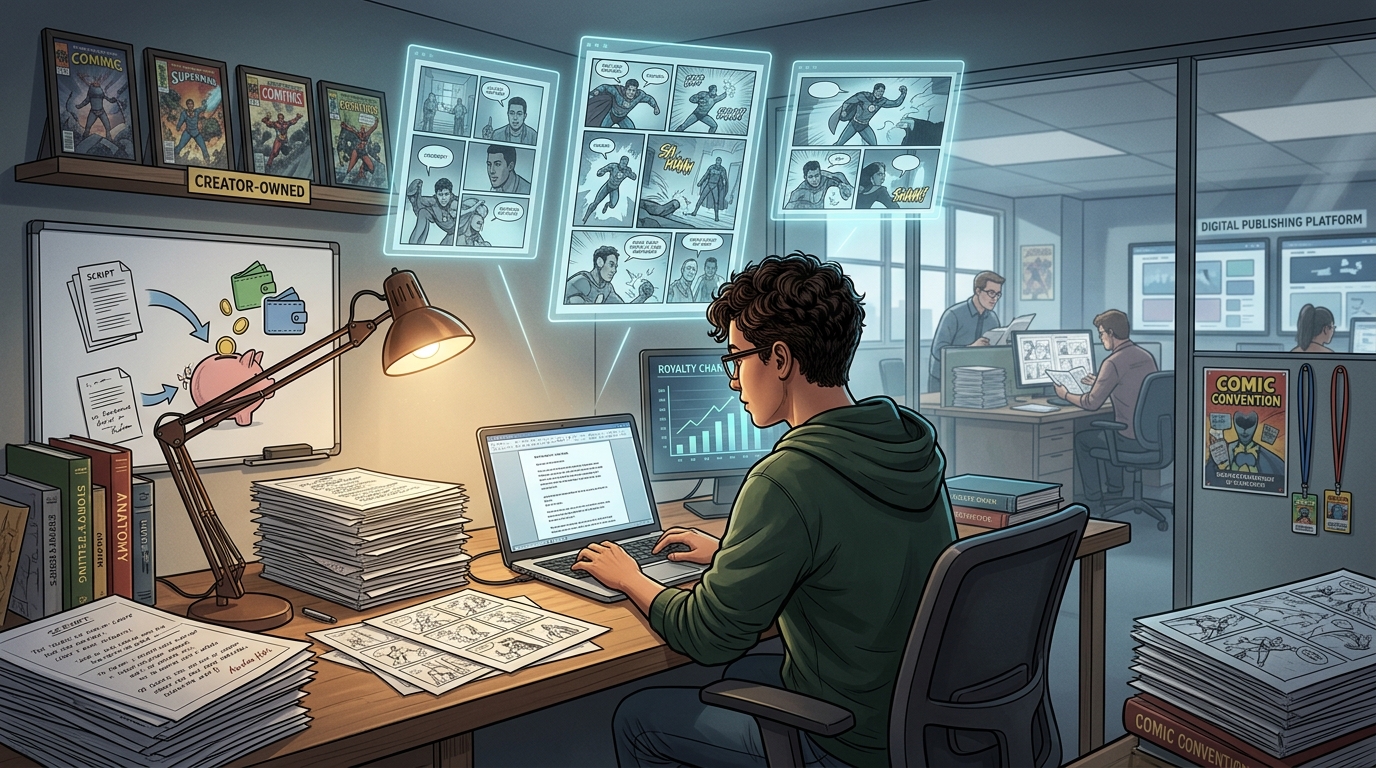
Comic books may look like pure imagination on the page, but behind every issue is a structured financial system that determines how writers earn, how publishers operate, and how creative ownership is negotiated. The question of how comic book writers get paid is far more complex than a simple per-page rate or salary—it involves contracts, royalties, freelance agreements, intellectual property rights, and sometimes long-term residual income tied to characters that become cultural icons.
Understanding this system requires looking at both the traditional print industry and the modern landscape of digital comics, creator-owned publishing, and multimedia adaptations. Payment is not uniform across the industry; instead, it is shaped by the publisher, the writer’s experience, and the type of work being produced.
The Core Ways Comic Book Writers Earn Money
At the most basic level, comic book writers are compensated in three primary ways: page rates, royalties, and creator ownership deals. Each of these structures reflects a different relationship between the writer and the publishing company.
Page Rates: The Standard Freelance Model
The most common form of payment in mainstream comic publishing is the page rate system. In this model, writers are paid a fixed amount for each finished page of script they deliver. This is especially common at major publishers such as Marvel and DC, where writers are typically hired as freelancers rather than full-time employees.
A standard page rate can vary significantly depending on experience, reputation, and the publisher’s budget. Entry-level writers might earn modest amounts per page, while established writers working on flagship titles can command substantially higher rates. The key characteristic of this system is that payment is tied directly to output. If a writer produces a 22-page issue, they are paid for those 22 pages regardless of how well the issue sells later.
This model provides immediate income but does not usually include long-term financial participation in the success of the comic.
Royalties: Earning from Success
Some writers also receive royalties, which are additional payments tied to the commercial performance of a comic. This typically comes into play when sales exceed a certain threshold, known as the royalty breakpoint.
Once a comic surpasses that level, the writer receives a percentage of additional revenue generated from sales. However, royalty structures vary widely and are often negotiated individually. Not all writers receive royalties, especially those at earlier stages of their careers.
Royalties introduce a performance-based element to comic book writing income. Instead of earning only for production, writers can benefit when a title becomes commercially successful. This is particularly important in long-running series or major crossover events that sell large volumes.
Creator-Owned Deals: Ownership and Long-Term Value
A different financial model exists in creator-owned comics, where writers retain partial or full ownership of the intellectual property they create. In these cases, writers may earn less upfront compared to major publisher work, but they gain long-term financial control over their creations.
This means income can come from multiple streams:
- comic sales
- trade paperback collections
- licensing deals
- film or television adaptations
- merchandise and digital distribution
Creator-owned work is often associated with independent publishers such as Image Comics, where creators maintain greater control over rights and revenue distribution.
This model shifts the focus from short-term payment to long-term asset building. A successful creator-owned series can generate income for years or even decades after its initial release.
How Major Publishers Structure Writer Compensation
To understand how comic book writers get paid in practice, it helps to look at how large publishers organize their creative workforce.
At companies like Marvel and DC, writers are generally classified as freelancers. They are not salaried employees but contracted contributors working on specific titles or story arcs. This means income is project-based rather than continuous.
Writers are typically assigned to ongoing series, limited runs, or special events. Each assignment comes with a negotiated contract that outlines page rates, deadlines, and sometimes bonus structures. The publisher retains ownership of characters and storylines created within these contracts, which is a key distinction from creator-owned publishing.
This structure allows publishers to maintain tight control over intellectual property while giving writers flexibility to move between projects.
The Role of Experience and Reputation
Earnings in comic book writing are heavily influenced by professional reputation. Established writers with a proven track record of successful titles can negotiate significantly better contracts than newcomers.
Experience affects compensation in several ways:
Writers with strong sales history are more likely to be assigned high-profile characters or major crossover events, which often come with higher page rates and potential bonuses. They may also have more leverage when negotiating royalty agreements or creative terms.
In contrast, emerging writers often begin with smaller titles or anthology contributions, where compensation is more standardized and less flexible.
This creates a career progression system where financial opportunity expands alongside creative reputation.
Additional Income Streams in Comic Book Writing
While page rates and royalties form the foundation of income, many writers also earn from secondary sources that extend beyond individual comic issues.
Trade paperback collections, for example, can generate additional payments if included in contract terms. These collections often bundle multiple issues into a single volume, creating long-term sales opportunities.
Some writers also receive income from adaptations when their work is optioned for film, television, or streaming platforms. Although rights are often owned by publishers, writers may receive credits or negotiated compensation depending on their contracts.
Appearances at conventions, speaking engagements, workshops, and teaching roles can also contribute to a writer’s overall income, especially for well-known figures in the industry.
Table: Common Payment Structures for Comic Book Writers
| Payment Type | How It Works | Stability | Long-Term Value |
| Page Rates | Paid per script page completed | High short-term | Low |
| Royalties | Percentage of sales above threshold | Medium | Medium |
| Creator-Owned Deals | Ownership-based revenue sharing | Variable | High |
| Adaptation Income | Payments from film/TV licensing agreements | Low to irregular | High potential |
Digital Comics and Changing Payment Models
The rise of digital publishing has introduced new financial dynamics for comic book writers. Platforms that distribute comics online often use subscription models, direct sales, or ad-based revenue sharing.
In some cases, writers are paid upfront for digital-first content. In others, compensation is tied to readership metrics or platform performance. This creates a more data-driven approach to earnings, where popularity and engagement can directly influence income.
Digital distribution also lowers production costs, which can sometimes allow for more experimental or independent projects. However, it can also result in less predictable income compared to traditional print publishing.
The Reality of Freelance Instability
One important aspect of comic book writing income is its inherent instability. Since many writers are freelancers, income is often project-based and can fluctuate significantly from month to month.
Writers may work intensively during a contract period and then experience gaps between assignments. This makes financial planning an important part of a long-term writing career in comics.
Successful writers often balance multiple projects simultaneously or diversify into related fields such as screenwriting, prose fiction, or editing work to maintain steady income.
Why Payment Structures Matter for Creativity
The way comic book writers are paid directly influences the kind of stories that get created. Page rate systems encourage productivity and efficiency, while creator-owned models encourage experimentation and long-term storytelling ambition.
Royalty systems introduce performance incentives, which can shape narrative decisions in subtle ways. Meanwhile, ownership-based models give writers more freedom but also more financial risk.
These economic structures are not separate from creativity—they actively shape it. The financial system behind comics is one of the reasons the medium can produce both tightly structured superhero universes and highly experimental independent stories.
FAQ: How Do Comic Book Writers Get Paid?
Do comic book writers get a salary?
Most comic book writers do not receive a fixed salary. They are typically freelancers paid per project or per page rather than full-time employees.
How much does a beginner comic book writer make?
Entry-level writers usually earn lower page rates and may start with smaller publishers or anthology work. Income varies widely depending on publisher and experience.
Do comic book writers earn royalties?
Some writers do earn royalties, but it depends on their contract. Royalties are more common when a comic sells beyond a certain threshold.
Do writers own the characters they create?
In mainstream publishing, characters are usually owned by the publisher. However, in creator-owned comics, writers retain ownership and earn long-term revenue from their work.
Can comic book writers make money from movies?
Yes, but it depends on rights agreements. Some writers receive compensation or credit when their characters or stories are adapted into films or television shows.
Is comic book writing a stable career?
It can be financially unpredictable because much of the work is freelance-based. Many writers combine multiple projects or related writing jobs to maintain stability.
Conclusion
Comic book writers are paid through a layered system that reflects the unique structure of the industry. Page rates provide immediate income, royalties reward commercial success, and creator-owned deals offer long-term financial potential. On top of this, digital publishing and adaptation rights have expanded the ways writers can earn from their work.
Ultimately, writing comics is not just a creative profession—it is also a negotiated economic relationship between storytelling, intellectual property, and audience demand.


