


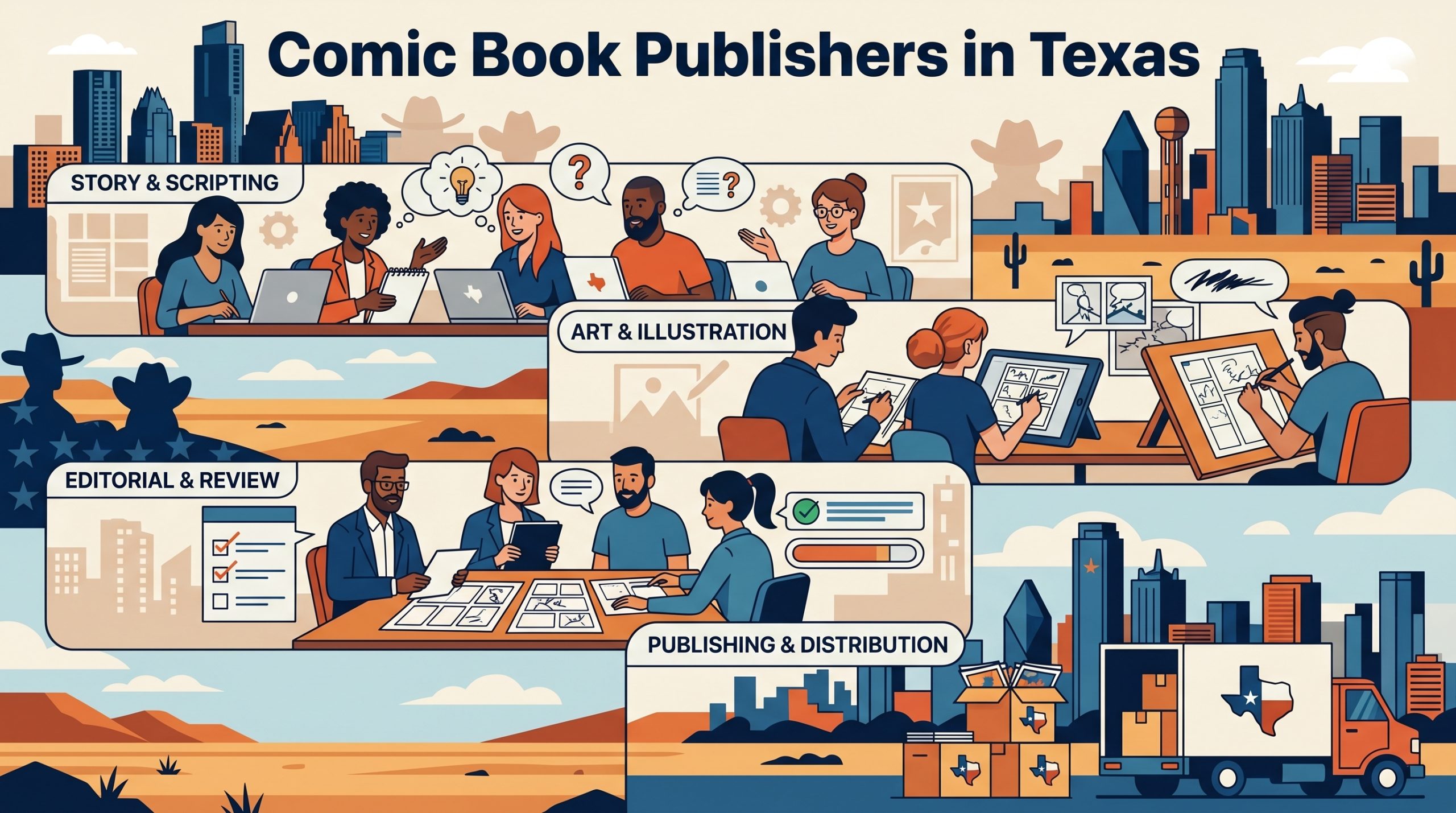
Texas has a surprisingly active and diverse comic publishing ecosystem, ranging from indie creator-owned studios to educational comic publishers and internationally distributed imprints. Unlike traditional hubs such as New York or California, the comic book publishers in Texas scene is strongly shaped by independent creativity, regional storytelling, and hybrid publishing models that support both print and digital comics.
For writers, Texas represents a practical entry point into the industry due to its mix of small press publishers, creator-owned imprints, and self-publishing-friendly networks.
The Comic Publishing Landscape in Texas (Expanded)
The Texas comic industry is built on a strong and steadily expanding foundation of independent publishing, creator-owned studios, and hybrid digital-print models. Unlike heavily centralized publishing markets, Texas operates as a distributed creative ecosystem where indie publishers, small presses, educational comic producers, and crowdfunding-driven creators all coexist.
Recent industry observations show that independent publishers now account for a significant portion of new comic and graphic novel output in the United States—around 40% of new releases in recent years are attributed to indie publishers . Texas reflects this broader national trend, with a particularly strong concentration of creator-owned studios and small press publishers in cities like Houston, Dallas, Austin, San Antonio, and College Station.
This structure creates a flexible entry environment for writers, especially those developing original intellectual property or experimental storytelling formats.
Strong Indie and Creator-Owned Publishing Culture
Texas is widely recognized for its creator-first publishing model, where writers and artists often retain ownership of their intellectual property. This is a major advantage compared to traditional corporate publishing systems.
Indie publishers in Texas typically prioritize:
- Original concepts over franchise-based storytelling
- Experimental narrative structures and hybrid genres
- Fast-moving production cycles with lower submission barriers
- Collaboration between writers, illustrators, and small editorial teams
Some Texas-based indie publishers (such as creator-driven studios in College Station and San Antonio) operate similarly to national creator-owned ecosystems, where individual creators develop long-running series without heavy corporate constraints .
This has led to a growing reputation for Texas as a testing ground for new comic IP development, especially in fantasy, sci-fi, horror, and manga-influenced storytelling.
Growing Educational and Children-Focused Comic Publishers
Another defining feature of the Texas comic ecosystem is its expanding educational and youth-focused publishing segment. Many publishers collaborate with schools, libraries, and literacy programs to produce comics that support learning outcomes.
This includes:
- Literacy-focused graphic novels for early readers
- Educational comics used in classroom environments
- Bilingual storytelling initiatives in some regions
- Social awareness comics covering topics like history, health, and community life
This segment has grown alongside broader U.S. graphic novel expansion, where print and digital comics continue to coexist and expand readership across age groups and educational institutions .
For writers, this creates a stable niche where storytelling is evaluated not only for entertainment value but also for instructional clarity and developmental impact.
1. Emerald Ghostwriting
Emerald Ghostwriting provides professional comic script development and storytelling support for writers who want to transform raw ideas into structured, publication-ready comic narratives. It is not a traditional publisher but functions as a development partner for writers preparing for submission in Texas-based indie markets and international platforms. The service focuses on concept refinement, character development, dialogue writing, and panel structuring to ensure industry-standard formatting. This is especially useful for beginners who may have strong ideas but lack technical scriptwriting experience. By improving narrative clarity and professional presentation, it increases the chances of acceptance by both indie and established comic publishers.
2. Antarctic Press (San Antonio, Texas)
Antarctic Press is one of the most established comic publishers in Texas, known for its strong commitment to creator-owned publishing. It has built a reputation for supporting independent writers and artists while producing a wide range of genres, including fantasy, action, science fiction, and manga-inspired comics. The publisher is particularly recognized for giving creators significant control over their intellectual property. With decades of industry presence, Antarctic Press has become a key gateway for indie creators aiming to reach national and international audiences. Its consistent output and genre diversity make it a major player in the Texas comic publishing ecosystem.
3. Viper Comics (Dallas, Texas)
Viper Comics is an independent publishing house based in Dallas that focuses primarily on graphic novels and trade paperback formats. It has a strong history of working with indie creators and developing original comic stories that emphasize narrative depth and professional production quality. The publisher is known for its editorial support and structured development process, which helps creators refine their stories for broader audiences. Viper Comics often collaborates with writers who are ready to transition from indie experimentation to more polished, market-ready publications. Its distribution network has helped many independent creators gain visibility in the wider comic industry.
4. Radio Comix (San Antonio, Texas)
Radio Comix is a long-standing alternative comic publisher that specializes in niche and experimental storytelling. It is known for publishing manga-inspired comics, anthropomorphic narratives, and anthology-style series that cater to specific audience segments. The publisher has played a significant role in supporting unconventional storytelling formats that do not always fit mainstream publishing categories. Its editorial approach encourages creative freedom and genre exploration, making it a preferred platform for indie creators with unique or experimental ideas. Radio Comix continues to maintain a loyal readership base within the alternative comics market.
5. Trouble Studios (El Paso, Texas)
Trouble Studios is an independent comic publisher focused on creator-driven storytelling and high-quality narrative development. It emphasizes emotionally engaging stories, strong character arcs, and visually compelling comic production. The studio works closely with both emerging and established creators, offering opportunities to publish original comic series across different genres. Its approach prioritizes storytelling depth and artistic expression rather than purely commercial output. This makes it particularly attractive for writers who want to develop meaningful, character-focused narratives. Trouble Studios continues to build its reputation as a supportive platform for indie comic development.
6. Valcon Comics (El Paso, Texas)
Valcon Comics specializes in educational and youth-focused comic publishing. Its primary mission is to create engaging visual stories that support learning and literacy development in school environments. The publisher produces comics that are often used in classrooms, making complex topics more accessible to younger audiences. Valcon Comics also works with bilingual storytelling formats, which enhances its educational reach across diverse communities. Writers working with this publisher typically focus on instructional clarity, simplicity, and educational impact. It is an important contributor to the intersection of education and visual storytelling in Texas.
7. Behemoth Comics (Dallas, Texas)
Behemoth Comics is a modern publishing company that focuses on both original and licensed comic properties. It has a strong presence in the international comic market and works with creators to develop graphic novels that can reach global audiences. The publisher is known for its multimedia approach, often expanding stories beyond traditional comics into broader entertainment formats. Behemoth Comics provides strong distribution support and collaborates with creators on high-quality, commercially viable projects. Its ability to bridge indie creativity with mainstream publishing makes it a significant player in the evolving Texas comic industry.
8. Codex Comics (College Station, Texas)
Codex Comics is an indie-focused publishing platform that emphasizes collaborative storytelling and creator-driven projects. It works with writers and artists from diverse backgrounds to develop original graphic novels and serialized comic content. The publisher encourages creative freedom while also supporting structured storytelling development. Codex Comics is particularly known for helping emerging creators bring their first published works to market. Its collaborative model allows writers to gain experience working closely with illustrators and editors, making it a valuable stepping stone for those entering the professional comic publishing industry.
9. Dimension Comics (Houston, Texas)
Dimension Comics is an independent publisher that focuses on narrative-driven comics with strong character development and thematic depth. It supports experimental storytelling and genre diversity, encouraging creators to explore unique and unconventional ideas. The publisher is particularly open to projects that push creative boundaries or blend multiple genres. Dimension Comics provides opportunities for writers who want to develop original intellectual property outside mainstream commercial constraints. Its editorial approach values storytelling innovation, making it a strong platform for indie creators seeking artistic freedom and narrative experimentation.
10. Graphic Novel & Indie Comic Studios (Texas Ecosystem)
Across Texas, a wide range of independent studios, collectives, and crowdfunding-based creators operate outside traditional publishing systems. These include Kickstarter-funded projects, digital-first comic creators, and small collaborative studios producing serialized or limited-run comics. This ecosystem plays a crucial role in helping new writers enter the industry without traditional barriers. Many creators use these platforms to build audiences, test ideas, and develop professional portfolios before approaching established publishers. The indie ecosystem remains one of the most dynamic and accessible entry points into the Texas comic publishing landscape.
Final Insight
Overall, the Texas comic publishing landscape is characterized by independent creative control, strong regional identity, educational publishing growth, and flexible distribution systems. With indie publishers contributing a major share of new comic output nationally and digital platforms expanding access to global audiences, Texas has become a highly practical and opportunity-rich environment for emerging and professional comic writers alike.
FAQs: Comic Book Publishers in Texas
1. What are the best comic book publishers in Texas for beginners?
Beginners often find the best opportunities with indie and creator-friendly publishers such as Antarctic Press, Codex Comics, and smaller Texas-based studios. These publishers are more open to first-time creators compared to large commercial houses. They typically prioritize storytelling potential and originality over industry experience, making them ideal entry points for new comic writers and illustrators building their first professional portfolios.
2. Do Texas comic publishers accept unsolicited submissions?
Some Texas publishers do accept unsolicited submissions, especially indie presses and smaller studios. However, larger or more established publishers often prefer agented submissions or curated pitches. Writers are usually required to follow strict submission guidelines, including formatted scripts, character breakdowns, and sample pages. Carefully reviewing each publisher’s submission policy is essential to avoid automatic rejection due to formatting or procedural errors.
3. How do I submit a comic book to publishers in Texas?
Submitting a comic in Texas typically involves preparing a professional pitch package. This includes a completed script, a synopsis, character descriptions, and sample artwork or panels. Writers then submit their material via email, online submission forms, or through agents, depending on the publisher. Indie publishers may also accept pitches at conventions or networking events. Following submission guidelines precisely is critical for consideration.
4. Do Texas comic publishers work with international writers?
Yes, several Texas-based comic publishers do work with international creators, particularly in the indie and digital publishing space. Publishers focused on global distribution or creator-owned content are more open to overseas submissions. However, writers must ensure their scripts meet professional formatting standards and are culturally adaptable for broader audiences. Strong storytelling quality is often more important than geographic location.
5. Is self-publishing a good option for comic creators in Texas?
Self-publishing is a highly popular and effective option in Texas, especially through platforms like Amazon KDP, Webtoon, Tapas, and Kickstarter. It allows creators full control over content, design, and distribution while reaching global audiences without traditional gatekeeping. Many successful Texas-based comic creators begin with self-publishing to build readership and then transition into traditional publishing opportunities once they establish credibility and a strong portfolio.


