


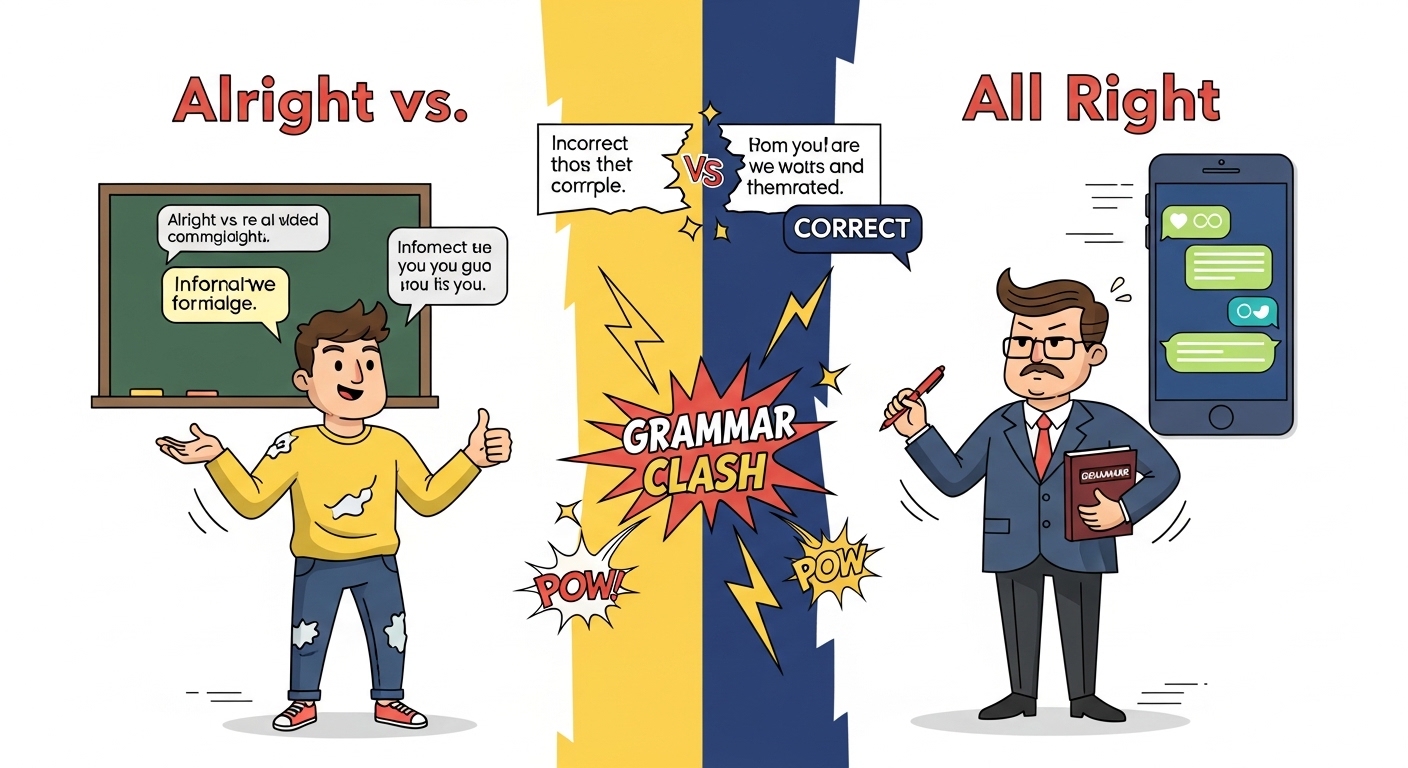
The difference between “alright” and “all right” is one of those grammar questions that seems small on the surface but often creates confusion even for experienced writers. Both forms are commonly seen in everyday writing, informal communication, and published content, yet they are not always interchangeable.
Understanding when to use each form is less about memorizing a rigid rule and more about recognizing context, tone, and level of formality. While both expressions are widely understood, only one is traditionally considered fully standard in formal English.
This distinction matters because word choice affects clarity, credibility, and tone—especially in professional or academic writing. It also influences how polished or authoritative writing appears to readers, particularly in contexts where precision and consistency are expected.
What “All Right” Means in Standard English
“All right” is the older and traditionally correct form in standard English. It is widely accepted in formal writing, editing standards, and academic usage. The phrase functions as both an adjective and an adverb depending on context, and it generally conveys meanings such as “acceptable,” “satisfactory,” or “okay.”
In most formal contexts, “all right” is preferred because it aligns with standard grammatical conventions. It is considered more precise and reliable in situations where clarity and correctness matter. Many style guides continue to recommend it because it avoids ambiguity and maintains linguistic consistency across formal documents.
For example, when describing something as acceptable or adequate, “all right” maintains grammatical consistency and avoids stylistic debate. It is often used in carefully edited writing where standardization is important for professionalism and readability.
Common Uses of “All Right”
“All right” appears in several functional contexts in English, and its meaning can shift slightly depending on usage.
It is commonly used to indicate:
- Agreement or acceptance
- A state of being satisfactory or adequate
- Confirmation that something is correct or fine
- A transitional phrase in conversation or writing
In most of these cases, the phrase maintains a neutral and formal tone, making it suitable for structured writing environments. It also works well in situations where clarity is more important than stylistic variation, such as reports, essays, and instructional content.
For example, in formal communication, saying something is “all right” communicates approval or acceptance without ambiguity. It can also help maintain a professional tone in situations where emotional expression or informality is not appropriate.
What “Alright” Means in Modern Usage
“Alright” is a more modern, informal variation of “all right.” It has become increasingly common in everyday writing, digital communication, and casual contexts. However, its acceptance in formal grammar is still debated among language purists and style guides.
Despite this debate, “alright” is widely understood and frequently used in contemporary English. Its popularity is largely driven by conversational tone and the natural evolution of language in informal settings. Over time, it has become a natural part of spoken English and is now commonly seen in creative writing and dialogue.
In many cases, “alright” conveys the same meaning as “all right,” but with a more relaxed and conversational feel. It often reflects how people actually speak, which makes it feel more natural in informal contexts where strict grammar rules are less important.
Where “Alright” Is Commonly Used
“Alright” is most often found in informal or semi-formal contexts where tone matters more than strict grammatical formality.
Typical usage includes:
- Casual conversations and messaging
- Dialogue in fiction writing
- Informal digital communication
- Modern creative writing styles
In these environments, “alright” feels more natural and fluid because it reflects spoken language patterns. It helps writers create realistic dialogue and a more relatable tone, especially in storytelling where authenticity of voice is important.
However, in strict academic, legal, or editorial contexts, “all right” is still generally preferred. In those cases, maintaining standardized grammar helps ensure clarity and avoids unnecessary criticism or editorial correction.
Key Differences Between Alright and All Right
Although both forms are widely understood, they differ in terms of formality, acceptance, and stylistic tone. The distinction is not about meaning but about usage context and linguistic convention.
“All right” is considered the standard form and is more widely accepted in formal writing. “Alright,” on the other hand, is an informal variant that has gained popularity in modern usage but is still sometimes viewed as less formal.
In practical terms, both expressions communicate the same idea, but their appropriateness depends on where and how they are used. Writers often choose between them based on audience expectations, tone requirements, and publication standards.
Clear Comparison of Usage
| Aspect | All Right | Alright |
| Formality | Formal and standard | Informal and conversational |
| Acceptance | Universally accepted in formal writing | Common but sometimes discouraged in formal contexts |
| Usage Context | Academic, professional, editorial | Casual, conversational, creative writing |
| Tone | Neutral and precise | Relaxed and modern |
| Meaning | Same core meaning | Same core meaning |
This comparison shows that the difference is not semantic but stylistic. The choice depends entirely on tone and context rather than meaning. Understanding this helps writers maintain consistency and avoid unnecessary confusion in different writing environments.
Which One Should You Use in Writing?
The choice between “alright” and “all right” depends on the level of formality required in your writing. In professional, academic, or editorial contexts, “all right” is generally the safer and more accepted option. It aligns with traditional grammar standards and avoids potential stylistic criticism.
In contrast, “alright” can be used effectively in informal writing, dialogue, and modern content where a conversational tone is preferred. It often helps make writing feel more natural and relatable, especially in storytelling or digital communication.
A practical way to decide is to consider the audience. If the writing is meant for formal evaluation or publication, “all right” is usually the better choice. If the goal is casual communication or creative expression, “alright” is acceptable and often preferred for tone.
Frequently Asked Questions (FAQs)
Is “alright” grammatically correct?
“Alright” is widely used and understood, but many traditional grammar guides still consider “all right” the standard and more formally correct version. Its acceptance has increased in modern usage, but it remains stylistically informal in strict writing rules.
Is there any difference in meaning between alright and all right?
No, both expressions generally have the same meaning. The difference lies in tone and formality rather than definition. Context determines how appropriate each version feels in a given situation.
Can I use “alright” in academic writing?
It is usually recommended to avoid “alright” in academic or formal writing and use “all right” instead for standard compliance. Most academic institutions still prefer the traditional form.
Why do people use “alright” if “all right” is correct?
“Alright” reflects modern, informal speech patterns and is more commonly used in casual communication and creative writing. It feels more natural in dialogue and digital conversations.
Which one should I use in professional writing?
“All right” is preferred in professional, academic, and formal contexts due to its standard grammatical acceptance. It ensures clarity, consistency, and adherence to conventional style rules.


