


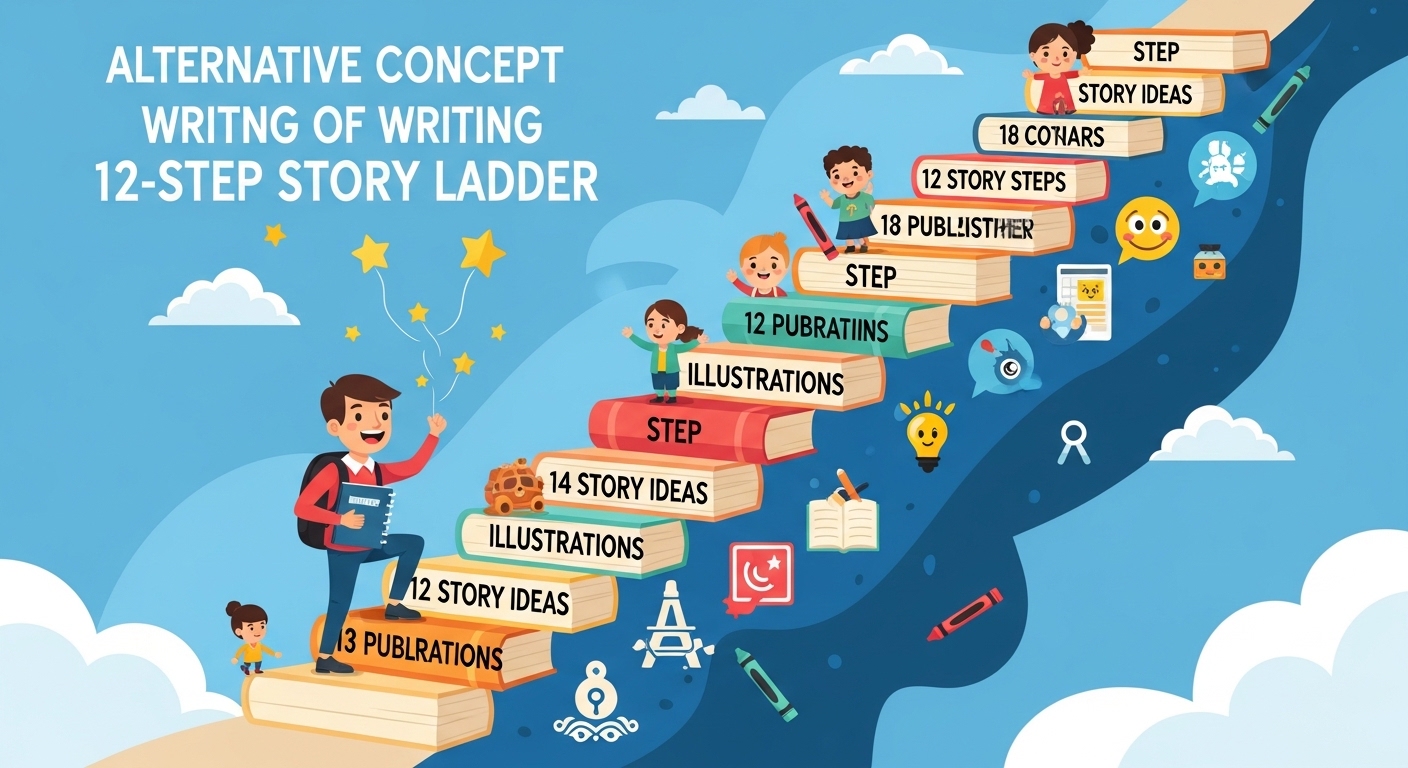
Writing a children’s book has never been more exciting than it is in 2026. Children today are growing up in a world full of visual stimulation, digital storytelling, and fast-paced entertainment, yet the demand for meaningful, imaginative, and emotionally rich stories for young readers continues to rise. Whether it’s a playful picture book for bedtime, an early reader story that builds confidence, or a middle-grade adventure that sparks curiosity, children’s literature remains one of the most powerful forms of storytelling.
But here’s the truth many aspiring writers overlook: writing for children is not “simpler” than writing for adults. It’s more focused, more intentional, and often more emotionally precise. Every word carries weight. Every sentence must respect the reader’s age, attention span, and understanding of the world. This guide breaks down 12 simple steps to write a children’s book in 2026, helping you move from idea to a structured, publishable manuscript without overwhelm.
Hook-Based Reality Check for Aspiring Children’s Book Writers
The Excitement vs Reality Gap
Most people begin their children’s book journey with excitement. The idea feels simple at first—fun characters, a light message, and an easy-to-follow story. It often seems like one of the most approachable forms of writing.
However, this early confidence usually fades once the actual writing begins. What looks simple on the surface quickly reveals itself as a disciplined craft that demands clarity, structure, and emotional precision.
Why Most First Drafts Don’t Get Finished
A major challenge for beginners is not starting the book—it’s finishing it. Many writers begin with strong ideas but lose momentum midway through the manuscript.
This usually happens because the story lacks direction or the writer underestimates how tightly structured children’s storytelling needs to be. Without a clear emotional or narrative arc, even a good idea can lose its shape.
Why Writing for Children Requires Precision
Children’s books may appear simple, but they are actually highly intentional. Every sentence must match the reading level, attention span, and emotional understanding of the target age group.
A story that feels natural to an adult may feel confusing or overstimulating to a child if not carefully structured. This is where many early manuscripts fail—not due to lack of creativity, but lack of precision.
The Age Group Mismatch Problem
One of the most overlooked mistakes in children’s writing is failing to match the story to the correct age group.
A concept that works for early readers may not hold attention for older children, and vice versa. Understanding this mismatch early helps avoid rewriting or abandoning drafts later in the process.
Why Children’s Books Matter More Than Ever in 2026
Growing Demand for Meaningful Storytelling
Children’s books in 2026 are not just entertainment—they are tools for emotional and cognitive development. There is a growing demand for stories that feel thoughtful, engaging, and emotionally grounded.
Readers, parents, and educators are increasingly drawn to books that offer more than surface-level storytelling.
Shift Toward Emotional Intelligence in Stories
Modern children’s literature is placing greater emphasis on emotional learning. Themes like kindness, resilience, identity, and friendship are now central to many successful books.
These stories help children process emotions and understand real-world experiences in a safe and imaginative way.
Rise of Early Reading Culture
Children are beginning to engage with books at earlier ages than before. This shift has created a stronger need for well-crafted, age-appropriate storytelling that can compete with digital media and visual content.
As a result, clarity, pacing, and engagement have become more important than ever in children’s writing.
Increasing Value of Diverse Narratives
There is also a growing appreciation for stories that reflect different backgrounds, perspectives, and life experiences.
This diversity helps children build empathy and understand the world beyond their immediate environment, making storytelling more impactful than ever.
Step-by-Step Guide to Writing a Children’s Book from Idea to Manuscript
Step 1: Understand the Core Purpose of Children’s Literature
Before writing anything, it’s important to understand what makes children’s literature unique. At its heart, a children’s book is designed to do more than entertain. It shapes imagination, builds emotional intelligence, and introduces life concepts in an accessible way.
A strong children’s book often blends three key elements: storytelling, learning, and emotional connection. Unlike adult fiction, where complexity can be layered and abstract, children’s storytelling thrives on clarity and relatability. Even fantasy worlds must feel emotionally grounded.
Think about whether your story is meant to:
- Teach a life lesson subtly
- Encourage imagination and curiosity
- Build reading confidence
- Explore emotions like friendship, fear, or courage
Once you are clear on the purpose, every other decision becomes easier.
Step 2: Choose the Right Age Group
One of the most important decisions in children’s book writing is identifying your target age group. This directly influences vocabulary, sentence structure, story length, and even the emotional depth of your narrative.
Children’s literature is generally divided into categories such as picture books, early readers, chapter books, and middle-grade fiction. A picture book for a toddler might rely heavily on illustrations and simple repetition, while middle-grade readers expect layered plots and deeper character arcs.
For example, a story about friendship for a 5-year-old might focus on sharing toys, while for a 10-year-old it could explore loyalty, misunderstandings, and emotional growth.
Understanding age groups helps you avoid writing above or below your audience’s comprehension level, which is one of the most common mistakes beginners make.
Step 3: Develop a Simple but Strong Story Idea
Every great children’s book starts with a clear and focused idea. The key is simplicity—not limitation, but clarity. Children connect best with concepts they can immediately understand or emotionally relate to.
Your idea could come from everyday life, imagination, or even a small emotional moment. A lost toy, a talking animal, a nervous child starting school, or a magical object in an ordinary home can all become powerful story foundations.
What matters is not complexity, but emotional clarity. Ask yourself:
- What is the emotional journey?
- What will the child feel at the end of the story?
- Is the idea relatable or imaginative enough to hold attention?
A strong idea usually revolves around one central theme rather than multiple competing storylines.
Step 4: Build Memorable Characters
Children remember characters more than plots. A well-written character becomes a companion in their imagination long after the book is closed.
When creating characters, focus on traits that are easy to recognize but still interesting. This could be bravery mixed with curiosity, shyness paired with kindness, or even a talking animal with human-like emotions.
Avoid overcrowding your story with too many characters. Instead, give depth to a few. Even in picture books, a single strong protagonist and one supporting character can be enough to carry the entire narrative.
The most successful children’s book characters often:
- Have simple, clear motivations
- Show emotional growth
- Make mistakes and learn from them
Step 5: Choose a Setting That Sparks Imagination
The setting in a children’s book is more than just a backdrop—it is part of the storytelling itself. Whether it’s a classroom, a magical forest, or a small village, the setting should feel alive and interactive.
For younger readers, familiar settings help build comfort and understanding. For older children, imaginative worlds can expand creativity and curiosity.
A strong setting should:
- Be easy to visualize
- Support the story’s emotional tone
- Encourage curiosity and exploration
Even a simple setting like a bedroom can become magical when described through a child’s perspective.
Step 6: Structure Your Story Around a Simple Arc
Children’s books thrive on clarity of structure. Even complex themes should be presented through a straightforward narrative arc: beginning, conflict, and resolution.
At the beginning, introduce your character and their world. In the middle, present a challenge or problem that disrupts normal life. At the end, resolve the issue in a satisfying and emotionally meaningful way.
Unlike adult fiction, subplots are usually minimal or unnecessary. The goal is to maintain focus and emotional clarity throughout.
Step 7: Write in Age-Appropriate Language
Language is one of the most important aspects of writing a children’s book. The goal is not to oversimplify but to communicate clearly and rhythmically.
For younger readers, sentences should be short, direct, and easy to follow. Repetition can be powerful, especially in picture books. For older readers, you can introduce slightly more complex vocabulary, but clarity should always remain a priority.
A good practice is reading your sentences aloud. If it feels natural and easy to understand, you’re on the right track.
Step 8: Focus on Emotional Connection
Children may not always remember every detail of a story, but they always remember how it made them feel. Emotional resonance is what transforms a simple story into a meaningful experience.
Your story might explore themes like friendship, courage, fear, kindness, or self-discovery. These emotions should be woven naturally into the narrative rather than explicitly stated.
Instead of telling the reader what to feel, show them through actions and situations. A character sharing their last piece of candy speaks louder than describing generosity.
Step 9: Plan Illustration Integration (If Applicable)
In many children’s books, especially picture books and early readers, illustrations play a crucial role. Even if you are not an illustrator, you should think visually while writing.
This means considering:
- Where visuals can enhance storytelling
- How text and images will interact
- Which moments deserve full-page illustrations
Illustrations are not decoration—they are part of the narrative experience. A well-placed visual can communicate emotion more effectively than paragraphs of description.
Step 10: Revise with a Child-Centric Lens
Editing a children’s book is not just about fixing grammar. It’s about ensuring clarity, engagement, and emotional flow from a child’s perspective.
When revising, ask yourself:
- Would a child understand this sentence easily?
- Is the pacing too slow or too fast?
- Does the story hold attention from start to finish?
Reading your manuscript aloud or testing it with a child audience (if possible) can reveal surprising insights. Children notice rhythm, repetition, and emotional tone more than technical perfection.
Step 11: Strengthen Your Ending
The ending of a children’s book should feel satisfying, clear, and emotionally complete. It does not need to be dramatic, but it should feel meaningful.
A strong ending often shows growth. The character may not become perfect, but they should learn or experience something that changes their perspective.
Avoid abrupt or overly complicated conclusions. Instead, aim for emotional closure that leaves a lasting impression.
Step 12: Prepare Your Manuscript for the Next Stage
Once your story feels complete, the final step is preparing it as a polished manuscript. This includes formatting, consistent structure, and final proofreading.
At this stage, focus on:
- Consistent tone and voice
- Clean sentence structure
- Proper paragraph flow
- Elimination of unnecessary repetition
Your goal is to present a clear, professional manuscript that is ready for illustration, review, or further development.
FAQs About Writing a Children’s Book
What makes a children’s book successful?
A successful children’s book combines simplicity, emotional connection, and strong storytelling. The best books stay with readers because they feel relatable and meaningful, not because they are complex.
How long should a children’s book be?
Length depends on the age group. Picture books are often short, while middle-grade books can extend significantly. What matters more than length is pacing and engagement.
Do I need illustrations to write a children’s book?
No. You can write the manuscript first. Illustrations usually come later in collaboration with an artist or illustrator, depending on the format of the book.
What topics work best for children’s books?
Themes like friendship, bravery, kindness, curiosity, and growing up are timeless. Imaginative or magical elements also work well when paired with emotional grounding.
Can beginners write children’s books successfully?
Yes. Many successful children’s authors start with simple ideas and grow their skills over time. What matters most is clarity of thought and understanding your audience.
Writing a children’s book in 2026 is both an artistic and thoughtful process. It requires balancing imagination with structure, creativity with clarity, and storytelling with emotional intelligence. When done well, even the simplest story can become something a child remembers for a lifetime.


